NEW CAR VS TOKUNBO CAR: THE REAL ANSWER EVERY NIGERIAN BUYER NEEDS
Introduction: The Question Every Nigerian Car Buyer Eventually Asks
You’ve been saving. You’ve done the mental math a hundred times. You’ve watched the exchange rate like a hawk and argued about it with your colleagues over lunch. And now you’re finally at the point where you can actually buy a car.
But then comes the question that stops nearly every Nigerian car buyer in their tracks:
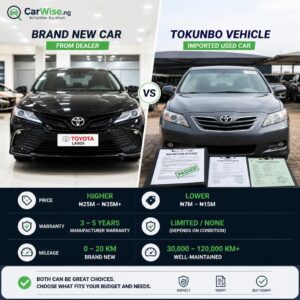
Should I buy a new car or a tokunbo?
It sounds simple. It isn’t.
On one side, your uncle swears by new cars — “At least you know what you’re getting.” On the other, your colleague just bought a clean 2017 Toyota Camry tokunbo for less than the cost of a brand-new Hyundai Elantra, and he won’t stop talking about what a deal he got.
Both of them might be right. Both of them might also be leaving out important information that changes the calculation entirely.
Here’s the truth: there is no universally correct answer. The right choice depends on your budget, your driving needs, your mechanical knowledge, your risk tolerance, and how long you plan to keep the vehicle. What works perfectly for a Lagos-based professional driving a 25-kilometer daily commute may be completely wrong for a business owner in Kano running a delivery operation.
This guide exists to give you the real answer — not a vague “it depends” that leaves you where you started, but an honest, detailed breakdown that helps you arrive at the decision that’s right for your specific situation.
By the end, you’ll understand the true costs of each option, the risks both sides carry, which roads and lifestyles favor which choice, and exactly how to evaluate your decision with confidence.
Let’s settle this debate properly.
Understanding the Nigerian Automotive Market in 2024
Before we compare the two options, you need to understand the environment in which you’re making this decision. Nigeria’s automotive market is unlike almost any other in the world, and that uniqueness affects every aspect of the new car vs tokunbo calculation.
The Market Landscape
Nigeria is the largest economy in Africa and one of its largest vehicle markets. Yet less than 10% of vehicles sold annually in Nigeria are brand new. The overwhelming majority — over 90% — are used vehicles, predominantly tokunbo imports.
Why? The math is straightforward: Nigeria has a large middle class that needs personal transportation, but new car prices — amplified by import duties, dealer margins, and naira depreciation against the dollar — have moved far beyond the financial reach of most working Nigerians.
What the Exchange Rate Has Done to Car Prices
This is perhaps the most important context for the 2024 market.
The collapse of the naira since the 2023 forex liberalization has had a dramatic effect on vehicle prices in Nigeria. A brand-new Toyota Corolla Cross that sold for approximately ₦17 million in early 2023 now trades for ₦32 million or more. A new Toyota Hilux that was ₦25 million is now approaching ₦50 million.
Even tokunbo prices have risen significantly — because these vehicles are priced in foreign currency at the port, and converted to naira at current rates. A tokunbo vehicle that cost ₦4 million in 2022 might now cost ₦7–₦9 million for the same model and year.
What this means for your decision: The gap between new and tokunbo pricing has widened considerably. A new car now costs dramatically more than it did two or three years ago, making the tokunbo calculation more attractive to many buyers on a fixed budget — but also raising the stakes if that tokunbo turns out to be a problem vehicle.
The Demand-Supply Reality
Nigeria has no significant domestic vehicle manufacturing industry at scale. The Innoson Vehicle Manufacturing (IVM) operation in Nnewi and a few assembly plants represent the beginning of something, but they don’t yet come close to meeting Nigeria’s vehicle demand. This means the vast majority of vehicles — new or used — are imported, and their prices are tied directly to import costs, shipping rates, port charges, customs duties, and the naira-dollar exchange rate.
Understanding this context helps you see why every vehicle purchase in Nigeria is more complex than simply walking into a dealership and picking a color.
What Exactly Is a Tokunbo Car?
For newer readers: the term tokunbo comes from Yoruba and loosely translates to “from across the sea” or “from abroad.” In Nigerian automotive parlance, it refers to any used vehicle that was previously owned and used in another country — typically the United States, Canada, the United Kingdom, or Europe — before being imported to Nigeria.
Tokunbo vs Nigerian-Used: An Important Distinction
Many Nigerians use the term “tokunbo” loosely to mean any used car, but there’s an important distinction:
- Tokunbo: A vehicle previously owned and used outside Nigeria, imported specifically for resale. The vehicle has a foreign history.
- Nigerian-used (Naija-used): A vehicle that was originally purchased new in Nigeria and has been driven entirely within the country.
These two categories behave very differently in terms of pricing, condition, and risk profile. This guide primarily discusses the tokunbo category when referring to used vehicles, but we’ll note where Nigerian-used vehicles fit into the equation.
Where Do Tokunbo Cars Come From?
The majority of tokunbo vehicles sold in Nigeria originate from:
- United States (the largest source, especially via the ports of Baltimore and Houston)
- United Kingdom (right-hand drive vehicles — though most Nigerian tokunbos are left-hand drive from the US)
- Canada
- United Arab Emirates (increasingly common)
- Japan (primarily for specific models popular in Nigeria like Toyota Land Cruiser Prado)
Most pass through Nigerian ports — primarily Tin Can Island Port and Apapa Port in Lagos, and Onne Port in Rivers State — before clearing customs and arriving in dealerships or being sold directly by importers.
The Real Cost Comparison: New Car vs Tokunbo Car
Let’s put actual numbers on this debate. Numbers change with market conditions, but the relative relationships between costs remain instructive.
Side-by-Side Comparison: Toyota Corolla (2024 Market)
| Cost Factor | New Toyota Corolla (2024 Model) | Tokunbo Toyota Corolla (2018 Model, Good Condition) |
|---|---|---|
| Purchase Price | ₦32M – ₦38M | ₦9M – ₦14M |
| Cost Difference | — | Save ₦20M+ |
| Customs/Import Duty | Included in price | Already paid (included in price) |
| Registration (First) | ₦150,000 – ₦300,000 | ₦80,000 – ₦200,000 |
| Insurance (Comprehensive) | ₦350,000 – ₦600,000/year | ₦150,000 – ₦300,000/year |
| Expected Maintenance (Year 1) | ₦80,000 – ₦150,000 | ₦200,000 – ₦600,000 |
| Depreciation (Year 1) | 15–25% of purchase price | 5–10% of purchase price |
| Year 1 Total Cost of Ownership | ₦38M – ₦46M | ₦9.6M – ₦15.1M |
Important caveat: The tokunbo figures assume a properly inspected, genuinely good-condition vehicle. A tokunbo with hidden problems can cost significantly more in its first year.
The Numbers on a Mid-Range Budget
Let’s say you have ₦12 million to spend on a vehicle. Your options look very different depending on which direction you go:
₦12 million on a new car:
- Brand-new Hyundai Elantra (base trim)
- Brand-new Changan Alsvin or similar Chinese brand
- Brand-new GAC GS3 or similar Chinese SUV
- Very limited Toyota/Honda options
₦12 million on a tokunbo:
- 2017–2019 Toyota Camry (excellent condition)
- 2016–2018 Honda Accord
- 2015–2017 Lexus ES 350
- 2016–2018 Toyota RAV4
- 2014–2016 Lexus RX 350 (lower mileage examples)
The purchasing power difference is stark. With ₦12 million, the tokunbo market gives you access to vehicles that — when new — cost the equivalent of ₦40–₦80 million at today’s prices.
The Case for Buying a New Car in Nigeria
Let’s be fair to both sides. There are genuinely compelling reasons to buy new, and dismissing them shortchanges buyers who would genuinely be better served by a new vehicle.
1. You Know Exactly What You’re Getting
This is perhaps the most powerful argument for buying new. A new vehicle has never been driven hard, poorly maintained, involved in an accident, flooded, or subjected to any of the abuses that Nigerian roads and ownership patterns can inflict on a vehicle.
When you drive out of the dealership in a new car, the history of that vehicle starts with you. That’s a genuinely valuable thing — especially if you’ve ever had the experience of discovering a tokunbo vehicle’s hidden problems three months after purchase.
2. Manufacturer Warranty Coverage
New vehicles in Nigeria typically come with:
- 3-year/100,000 km warranty (Toyota, Honda, Hyundai — varies by manufacturer and dealership)
- Drivetrain warranties covering the engine and transmission
- Sometimes a separate roadside assistance program
For a buyer who isn’t mechanically knowledgeable — who doesn’t know how to evaluate a used engine or doesn’t have a trusted mechanic — a warranty provides genuine protection. If the transmission develops a problem at 40,000 km, you’re not paying for it.
3. Latest Safety Technology
Modern new vehicles come equipped with safety features that are either unavailable or expensive to add to older tokunbo vehicles:
- Multiple airbags (driver, passenger, side, curtain)
- Electronic Stability Control (ESC)
- Autonomous Emergency Braking (AEB) on newer models
- Rearview cameras (now standard in most markets)
- Lane departure warning systems
- Better-structured crumple zones and passenger protection
On Nigerian roads — which have some of the highest accident rates in the world — these features matter. The question is whether the premium for a new vehicle is worth it versus the safety profile of a well-maintained, modern tokunbo.
4. Fuel Efficiency Advantages
Newer engines are more fuel-efficient than their predecessors. With Nigerian petrol prices having risen dramatically since the removal of the fuel subsidy in 2023, the difference in fuel consumption between a 2024 engine and a 2014 engine can add up meaningfully over months of driving.
A new 1.8L Toyota Corolla averaging 12–14 km/L versus an older V6 tokunbo averaging 8–10 km/L represents a real cost difference at today’s pump prices.
5. No Immediate Maintenance Costs
A new vehicle typically requires nothing beyond routine scheduled servicing for the first 2–3 years. No surprises, no unexpected visits to the mechanic, no shock repair bills.
For buyers who want predictable, budgetable vehicle costs — especially those who are already stretching financially to make the purchase — this predictability has genuine value.
6. Financing Availability
Nigerian banks and financial institutions are more willing to offer vehicle loans for new cars from authorized dealers than for tokunbo vehicles. The documentation trail is cleaner, the vehicle’s value is verifiable, and the risk profile is better understood by lenders.
If you’re planning to finance your vehicle purchase, new car financing is more accessible and often comes at better rates through manufacturer-affiliated financing programs.
Who Should Seriously Consider a New Car?
- Buyers with budgets of ₦15 million or more who can access the full range of new vehicle options from reputable brands
- Buyers who plan to keep the vehicle for 7–10+ years (mitigating the depreciation impact)
- Buyers with no mechanical knowledge who want warranty protection
- Buyers who value absolute certainty about a vehicle’s history
- Corporate buyers who need consistent fleets and tax documentation
- Buyers who will drive extensively in conditions where newer safety features are particularly valuable
The Case for Buying a Tokunbo Car in Nigeria
The tokunbo market exists for powerful reasons. Let’s make the case honestly and thoroughly.
1. Dramatically Superior Purchasing Power
We’ve already shown the numbers. The gap in what your money gets you in the new versus tokunbo market is enormous. In the tokunbo market, a mid-range budget doesn’t just buy you transportation — it buys you a genuinely premium vehicle experience.
There’s real quality-of-life value in driving a Lexus ES 350 with leather seats, a premium sound system, heated seats, and a powerful 3.5L V6 engine — even if that vehicle is 8 years old with 100,000 km on the odometer — versus the base-trim economy sedan your budget affords in the new car market.
2. Proven Reliability at Scale
The most popular tokunbo vehicles in Nigeria aren’t randomly imported — they’re the models that have proven their reliability over millions of kilometers in their origin countries.
Toyota Camry, Toyota Corolla, Honda Accord, Honda Civic, Lexus RX, Lexus ES, Toyota RAV4 — these vehicles dominate the tokunbo market in Nigeria precisely because they have a demonstrated track record of durability. Japanese-brand vehicles in particular are known for their ability to reach 200,000, 300,000, and even 400,000 km with proper maintenance.
A properly maintained tokunbo Toyota Camry with 120,000 km on it may have significantly more reliable life remaining than a brand-new vehicle from a budget Chinese brand.
3. Lower Depreciation Impact
New vehicles depreciate fastest in their first three years. A ₦35 million new Toyota is worth approximately ₦25–₦27 million after two years of careful Nigerian ownership — a ₦8–₦10 million loss that has nothing to do with mechanical problems.
A tokunbo vehicle has already gone through this brutal initial depreciation curve. When you buy a well-maintained 5-year-old tokunbo, the depreciation rate has slowed considerably. Your ₦12 million tokunbo Camry may be worth ₦10–₦11 million after two years — a much smaller percentage loss.
For buyers who plan to sell the vehicle in 3–5 years, this depreciation difference is significant to their net financial position.
4. Spare Parts Availability
Popular tokunbo vehicles — Toyota, Honda, Lexus — have excellent spare parts availability across Nigeria. From Lagos Island markets to Abuja’s Emab Plaza to Port Harcourt’s Artillery Market, you can find parts for a Toyota Camry or Honda Accord at multiple price points (new, grade, used).
This ecosystem matters enormously in Nigeria, where authorized service centers for some newer brands may be concentrated in Lagos and Abuja, and where waiting for parts to be ordered can leave you without transport.
5. Mechanic Familiarity and Support Network
Nigerian mechanics know popular tokunbo vehicles intimately. Walk into any competent mechanic’s workshop in Lagos, Abuja, Kano, or any major city, and you’ll find technicians who have worked on hundreds of Toyota Camrys, Honda Accords, and Lexus ES350s. The diagnostic knowledge, the common failure points, the repair procedures — they know them cold.
This matters for cost, speed, and quality of repairs. Contrast this with newer Chinese-brand vehicles or recently introduced models, where the mechanic knowledge base is thinner and parts may need to be specially sourced.
6. Access to Luxury Features at Non-Luxury Prices
The tokunbo market allows Nigerian buyers to experience genuine premium automotive features — quality leather, sophisticated sound systems, powerful engines, advanced suspension setups — without paying luxury car prices.
A tokunbo 2016 Lexus RX 350 at ₦14–₦18 million delivers a driving experience, comfort level, and prestige factor that a brand-new economy sedan at ₦18 million simply cannot match. For buyers who care about the quality of their daily driving experience, the tokunbo market offers extraordinary value.
Who Should Seriously Consider a Tokunbo?
- Buyers with budgets under ₦15 million who want genuine quality and reliability
- Buyers who have a trusted, competent mechanic and can conduct or commission a thorough pre-purchase inspection
- Buyers who understand basic vehicle maintenance and can recognize early warning signs
- Buyers who want maximum vehicle for their money
- Buyers who drive shorter urban distances where the latest technology isn’t as critical
- Buyers who will hold the vehicle for 3–5 years and then upgrade
The Hidden Costs Both Sides Don’t Always Tell You
The new car vs tokunbo debate often focuses on the sticker price. But the real cost of vehicle ownership in Nigeria includes several factors that don’t appear in any brochure.
Hidden Costs of Buying New in Nigeria
Dealer markups above recommended retail price:
Authorized dealers in Nigeria — particularly for popular brands like Toyota and Honda — sometimes charge above manufacturer recommended retail prices, citing demand, logistics costs, or simply because they can. The price you see advertised may not be the price you pay when you walk in.
The waiting game:
Specific models and colors may not be in stock. Waiting lists of 2–6 months exist for popular models. During this waiting period, you may be forced to use an alternative — and during periods of naira depreciation, the price you confirmed may have increased by the time your vehicle arrives.
Accessories and dealer add-ons:
Dealers often bundle mandatory or strongly recommended accessories into the purchase — floor mats, window tinting, protective films, extended warranties, tracker devices. These can add ₦200,000–₦800,000 to the effective purchase price.
Insurance on a higher-value vehicle:
Comprehensive insurance on a ₦35 million new vehicle is significantly more expensive than on a ₦12 million tokunbo — a recurring annual cost difference of ₦200,000–₦400,000.
Hidden Costs of Buying Tokunbo in Nigeria
Pre-purchase inspection costs:
Budget ₦15,000–₦40,000 for a proper professional inspection. This is not optional — it’s the cost of due diligence.
Immediate repair and rectification costs:
Even a well-priced tokunbo often needs some work immediately or within the first few months: tires, brake pads, fluids, filters, small electrical gremlins, air conditioning servicing. Budget ₦100,000–₦500,000 for this, depending on the vehicle’s condition.
Customs documentation verification:
If buying from an importer directly, verify all customs clearance documentation. Using a lawyer or documentation specialist to verify paperwork costs ₦30,000–₦80,000 but is worth every kobo.
The unknown history factor:
No matter how thorough your inspection, you’re making decisions with incomplete information about a tokunbo’s history. This carries a residual risk that can materialize unexpectedly.
Which Nigerian Roads and Driving Conditions Favor Which Choice?
Nigeria’s roads are not uniform. The conditions in Lagos, Abuja, Kano, and rural Southeast Nigeria vary dramatically, and these differences affect the new vs tokunbo calculation.
Lagos: The Unique Challenge
Lagos’s stop-and-go traffic is one of the most punishing environments for a vehicle anywhere in the world. An average Lagos driver might spend 3–5 hours in traffic daily, with the engine idling, the air conditioning running constantly, and repeated short-burst acceleration and braking.
What this means: Automatic transmissions, cooling systems, and air conditioning compressors take disproportionate abuse in Lagos conditions. For Lagos drivers:
- New car advantage: Warranty covers any failures that emerge from this punishment
- Tokunbo advantage: Popular models (Camry, Accord) have proven cooling systems and transmissions known to handle Lagos conditions well when properly maintained
General Lagos verdict: Both options can work in Lagos. The tokunbo advantage is stronger for budget-conscious buyers; the new car advantage is stronger for buyers who want warranty protection against Lagos-induced wear.
Abuja: Relatively Better Roads
Abuja’s road infrastructure — while not perfect — is significantly better than Lagos. Roads are wider, better maintained, and traffic, while heavy, is less consistently gridlocked.
Abuja conditions are generally gentler on vehicles, making both new and tokunbo options viable across a wider range of vehicle types.
Long-Distance Highway Driving (Lagos-Abuja, Abuja-Kano, etc.)
If your primary use involves frequent long-distance highway driving on routes like Lagos-Ibadan Expressway, Abuja-Kaduna, or any of Nigeria’s major inter-state routes, vehicle reliability is paramount. Highway breakdowns in Nigeria are dangerous — poor lighting, high-speed traffic, and limited roadside assistance make any breakdown a serious event.
For highway-heavy use: A new vehicle with warranty coverage, or a tokunbo with a very well-documented inspection history and genuine reliability (Toyota, Lexus), is strongly recommended. Avoid tokunbo vehicles with unresolved issues for heavy highway use.
Rural and Off-Road Conditions
For buyers who regularly traverse rough roads — particularly in parts of Eastern Nigeria, the North, and rural areas — ground clearance, suspension robustness, and build quality matter more than fuel efficiency or technology features.
Best options for rough Nigerian roads:
- New: Toyota Hilux, Toyota Prado, Toyota Fortuner, Isuzu D-Max
- Tokunbo: Toyota Land Cruiser Prado, Toyota 4Runner, Lexus GX 460, Toyota Hilux (older reliable models)
In this use case, a tokunbo Land Cruiser Prado — known for legendary off-road capability and bulletproof reliability — often outperforms a cheaper new vehicle that wasn’t designed for serious rough-road use.
Financing Considerations: New vs Tokunbo
If you’re considering a vehicle loan rather than an outright purchase, the new vs tokunbo calculation changes significantly.
New Car Financing in Nigeria
Advantages:
- Banks are more willing to lend on new vehicles from authorized dealers
- Manufacturer-affiliated financing programs (Toyota Financial Services, Honda Credit, etc.) sometimes offer promotional rates
- Documentation is cleaner and the approval process is more straightforward
- Loan amounts can be larger relative to vehicle value
Disadvantages:
- Monthly repayments on a ₦30–₦40 million vehicle are substantial — potentially ₦500,000–₦900,000 per month depending on the term and rate
- Nigerian commercial bank interest rates for vehicle loans typically run 22–28% per annum, which dramatically increases the total cost of the vehicle over a 3–5 year term
- When you factor in interest, a ₦35 million new vehicle can cost you ₦50–₦60 million by the time it’s paid off
Example calculation (illustrative):
- New vehicle price: ₦35 million
- Loan amount: ₦28 million (20% down payment)
- Interest rate: 24% per annum
- Loan term: 48 months
- Monthly payment: Approximately ₦830,000
- Total interest paid: Approximately ₦11.8 million
- Total cost of vehicle: Approximately ₦46.8 million
Tokunbo Financing
Most Nigerian commercial banks are more cautious about tokunbo vehicle loans — particularly for vehicles older than 5–7 years. Some banks won’t lend on tokunbo vehicles at all; others require larger down payments.
If you’re financing, consider:
- Asset finance and leasing companies that specialize in used vehicle financing
- Microfinance institutions with vehicle loan products
- Cooperative society loans, which may offer better rates than commercial banks
- Salary advance programs through your employer
The tokunbo financing advantage is that if you can finance the purchase — even at commercial bank rates — the lower purchase price means dramatically lower monthly payments and total interest paid.
Example calculation (illustrative):
- Tokunbo vehicle price: ₦12 million
- Loan amount: ₦9.6 million (20% down payment)
- Interest rate: 24% per annum
- Loan term: 36 months
- Monthly payment: Approximately ₦380,000
- Total interest paid: Approximately ₦3.6 million
- Total cost of vehicle: Approximately ₦15.6 million
The monthly payment difference alone — approximately ₦450,000 per month — is a number that can determine whether a loan is realistic or not for many Nigerian buyers.
Depreciation: The Silent Wealth Killer
Of all the hidden costs of vehicle ownership, depreciation is the most powerful and least discussed in Nigeria’s automotive market. Understanding it can transform your decision.
How Depreciation Works
Depreciation is the loss in value that occurs simply because a vehicle ages and accumulates mileage — regardless of whether it has any mechanical problems. A vehicle you buy today is worth less tomorrow, less next month, and significantly less in three years.
New Car Depreciation in Nigeria
New vehicles in Nigeria typically depreciate as follows:
| Period | Approximate Depreciation |
|---|---|
| Immediately after purchase | 5–10% (the “driven off the lot” effect) |
| After Year 1 | 15–25% of purchase price |
| After Year 3 | 35–45% of purchase price |
| After Year 5 | 50–60% of purchase price |
What does this mean in real numbers?
A new Toyota Corolla purchased today for ₦35 million:
- Is worth approximately ₦27–₦30 million after 12 months
- Is worth approximately ₦20–₦23 million after 36 months
- Is worth approximately ₦14–₦18 million after 60 months
You’ve lost ₦17–₦21 million in value over 5 years — before you pay a single naira in maintenance.
Tokunbo Depreciation
The tokunbo vehicle has already gone through the steepest part of its depreciation curve before you bought it. The depreciation rate on a 5–7 year old vehicle is significantly lower than on a new one.
A tokunbo 2017 Toyota Camry purchased for ₦13 million today:
- Might be worth ₦11–₦12 million after 12 months
- Might be worth ₦9–₦10 million after 36 months
The absolute value lost is lower, and the percentage lost is lower. For buyers who eventually plan to sell their vehicle, this difference in depreciation can represent a meaningfully better financial outcome over a 3–5 year ownership period.
The Depreciation Wildcard: The Naira
Here’s where Nigeria adds a unique twist. During periods of significant naira depreciation against the dollar, vehicle prices in naira terms can actually increase even as the vehicles age — because the replacement cost (importing a newer vehicle) rises with the exchange rate.
This is exactly what happened in 2023–2024: many Nigerian vehicle owners discovered that their 5-year-old vehicles had paradoxically increased in naira value due to exchange rate movements. This effect tends to benefit tokunbo vehicles more, as their pricing is directly tied to the dollar cost of importation.
Insurance Costs: New vs Tokunbo
Vehicle insurance in Nigeria is legally required — third-party liability insurance at minimum. But the smart buyer purchases comprehensive cover.
Insurance Cost Comparison
| Vehicle Category | Third Party (Minimum) | Comprehensive Cover |
|---|---|---|
| New car (₦30M+ value) | ₦15,000 – ₦30,000/year | ₦400,000 – ₦700,000/year |
| Tokunbo (₦8M–₦15M value) | ₦10,000 – ₦20,000/year | ₦120,000 – ₦280,000/year |
| Tokunbo (₦15M–₦25M value) | ₦12,000 – ₦25,000/year | ₦200,000 – ₦400,000/year |
Comprehensive insurance costs are calculated as a percentage of the vehicle’s value (typically 1.5–2.5% annually). A higher vehicle value means a higher annual premium — another area where the tokunbo’s lower price translates to ongoing cost savings.
Over a 5-year period, the comprehensive insurance cost difference between a ₦35 million new vehicle and a ₦12 million tokunbo can amount to ₦1.5–₦2 million or more — a significant component of the total cost of ownership comparison.
Making the Decision: A Framework for Nigerian Buyers
By now you have the full picture. Let’s build a practical decision framework.
Step 1: Determine Your True Budget
Not what you can spend at the dealership — your total budget including:
- Purchase price
- Registration and documentation costs
- Initial repairs and servicing (for tokunbo)
- First year insurance
- Emergency repair fund
- Monthly fuel costs
If your budget after all of this is under ₦20 million, a new car severely limits your options. The tokunbo market may serve you better.
Step 2: Assess Your Risk Profile
Ask yourself honestly:
- Do you have a trusted, competent mechanic? (Tokunbo requires this)
- Can you absorb a surprise ₦300,000–₦800,000 repair bill without financial crisis? (New car warranty removes this risk)
- Do you have the patience to conduct a thorough inspection process? (Tokunbo requires this)
- Is reliability your absolute top priority — above price, features, and prestige? (New car with warranty delivers this most reliably)
Step 3: Consider Your Use Case
| Use Case | Recommended Choice |
|---|---|
| Daily Lagos traffic commute, budget under ₦15M | Tokunbo (proven model) |
| Long-distance business travel, frequent highway use | New (warranty) or premium tokunbo |
| Rough road / off-road use regularly | Tokunbo Land Cruiser/Prado or New Hilux |
| Corporate fleet, need for documentation | New car |
| Family car, safety-conscious buyer | New car or recent tokunbo with airbags |
| Budget under ₦12M, need reliable transportation | Tokunbo (definitely) |
| Budget over ₦25M, want best technology | New car |
Step 4: Consider Your Timeline
- Keeping 7+ years: New car’s depreciation impact is spread over a longer period, making it more financially justifiable
- Keeping 3–5 years: Tokunbo’s lower depreciation typically wins on financial terms
- Keeping under 3 years: Tokunbo almost always wins — new car depreciation in this period is brutal
Step 5: The Final Sanity Check
Before you decide, ask yourself: Can I comfortably afford to maintain this vehicle for the next 3 years, including insurance, routine servicing, fuel, and a reasonable emergency repair fund?
If the honest answer is “barely” — you may be stretching toward a new car that will strain your finances. A tokunbo that’s comfortably affordable is a better choice than a new car that’s financially precarious.
Our Recommended Picks in Both Categories
Based on reliability data, parts availability in Nigeria, mechanic familiarity, and overall value:
Best New Cars to Buy in Nigeria (2024)
| Vehicle | Strengths | Approximate Price |
|---|---|---|
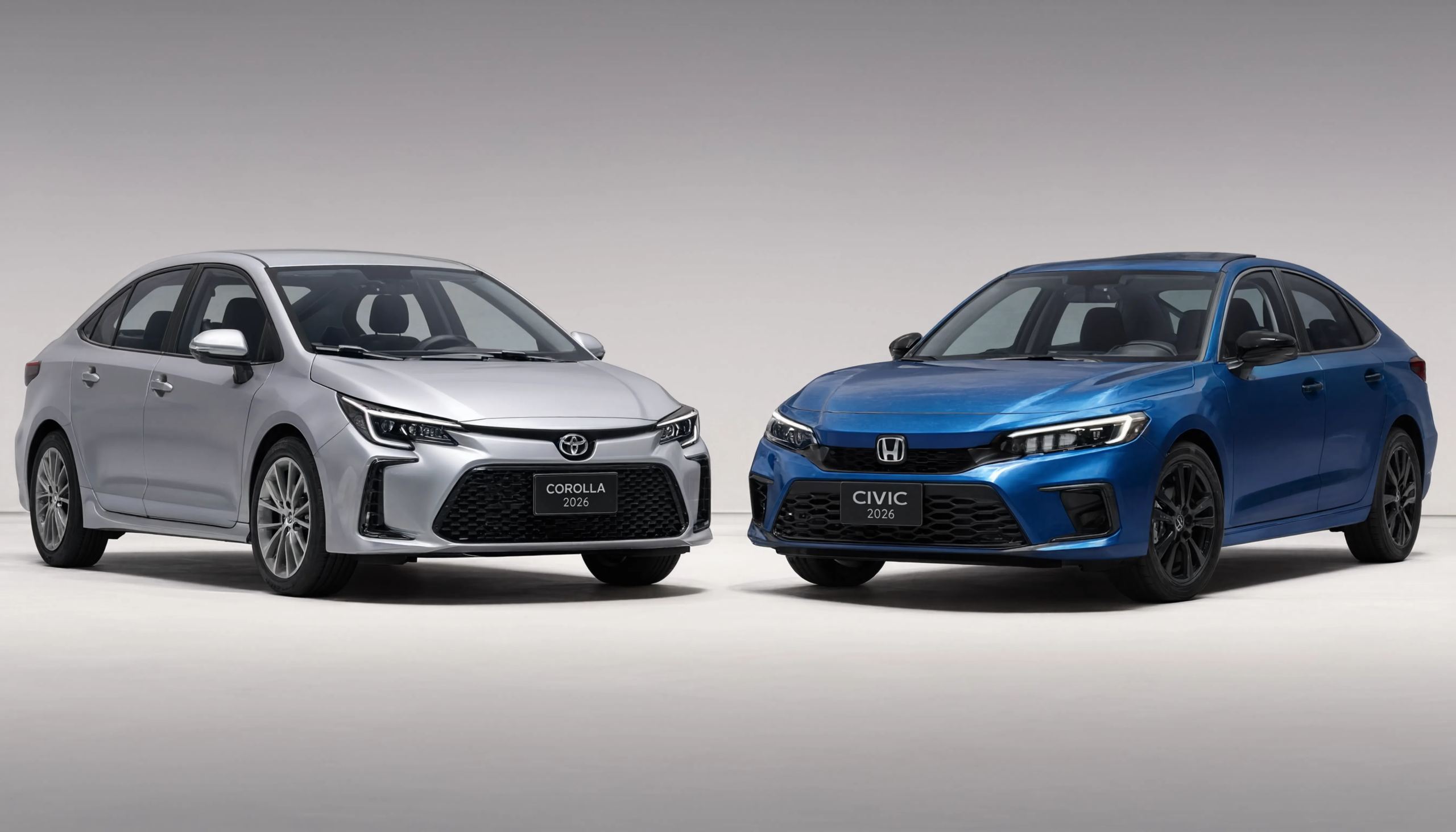
| Toyota Corolla Cross | Reliability, fuel efficiency, hybrid option | ₦32M – ₦38M |
| Honda Civic (11th Gen) | Sporty, reliable, well-equipped | ₦28M – ₦35M |
| Hyundai Elantra | Value, warranty, technology | ₦18M – ₦25M |
| Toyota Hilux | Off-road capability, extreme durability | ₦40M – ₦55M |
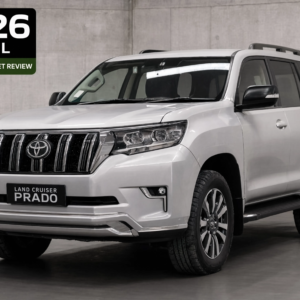
| Toyota Prado | Premium off-road, family SUV | ₦65M – ₦85M |
| Hyundai Tucson | SUV versatility, modern features | ₦30M – ₦40M |
Best Tokunbo Cars to Buy in Nigeria (2024)
| Vehicle | Age Range | Strengths | Approximate Price |
|---|---|---|---|
| Toyota Camry | 2016–2020 | Reliability, comfort, parts availability | ₦10M – ₦18M |
| Honda Accord | 2014–2018 | Value, driving dynamics, reliability | ₦8M – ₦14M |
| Lexus ES 350 | 2014–2018 | Premium experience, Toyota reliability | ₦12M – ₦20M |
| Toyota RAV4 | 2014–2018 | SUV versatility, reliability | ₦11M – ₦18M |
| Lexus RX 350 | 2013–2016 | Luxury SUV, premium features | ₦13M – ₦22M |
| Toyota Prado | 2012–2017 | Off-road, prestige, durability | ₦18M – ₦35M |
| Honda CR-V | 2015–2018 | Family SUV, reliability | ₦9M – ₦15M |
Frequently Asked Questions
1. Is it always cheaper to own a tokunbo car in Nigeria?
Not always. The purchase price is lower, but hidden costs — repairs, parts, and initial refurbishment — can significantly close the gap for tokunbo vehicles in poor condition. A properly inspected, good-condition tokunbo is typically cheaper to own over 3–5 years than a comparable new vehicle. A poorly inspected tokunbo with hidden problems can end up costing more.
2. Which is safer — a new car or a tokunbo car on Nigerian roads?
Modern new vehicles generally have superior passive safety features — more airbags, better-structured crash zones, and more advanced electronic stability systems. However, a well-maintained, properly functioning tokunbo from 2015 onwards typically includes the core safety features (multiple airbags, ABS) that matter most in a real-world Nigerian accident. The safety gap is less about new vs tokunbo and more about the specific model, year, and condition.
3. What tokunbo car age is ideal for Nigerian buyers?
For the best balance of reliability, technology, safety features, and parts availability, tokunbo vehicles from 2014 to 2019 represent the sweet spot in 2024. They’re modern enough to have current safety features and fuel-efficient engines, but old enough that the initial depreciation has already occurred and they’re priced well below new equivalents.
4. How do I verify a tokunbo car’s history in Nigeria?
Several approaches:
- Request the foreign title or registration document from the seller
- Use online services like VINCheck (US vehicles) or DVLA (UK vehicles) to verify the VIN history
- Have a professional inspector conduct a pre-purchase inspection
- Contact the FRSC to verify that the vehicle’s Nigerian registration (if it has one) is legitimate
- Ask the seller for customs clearance documentation (Form M, customs duty receipt)
5. Are Chinese brand new cars in Nigeria worth buying over tokunbo Japanese brands?
Chinese automotive brands — GAC, Changan, BAIC, Chery — have improved their quality significantly in recent years and offer competitive pricing in the new car market. However, there are genuine concerns about long-term reliability data (limited history in Nigeria), spare parts availability outside major cities, mechanic familiarity, and resale value.
For buyers who prioritize a new car warranty and have a ₦15–₦25 million budget, Chinese brands offer value in this space. For buyers whose priority is long-term reliability and resale value, a tokunbo Toyota or Honda remains a stronger choice in most scenarios.
6. What is the best resale value option — new or tokunbo?
In percentage terms, tokunbo vehicles from trusted Japanese brands (Toyota, Honda, Lexus) hold their value better in Nigeria than new vehicles (which suffer severe initial depreciation). However, in naira terms, exchange rate movements can affect both categories significantly. For resale value optimization, a tokunbo Toyota Camry, Lexus RX, or Toyota Prado in good condition consistently performs well in Nigeria’s secondhand market.
7. Should I buy a tokunbo car without a warranty or a new Chinese brand with a warranty?
This is genuinely nuanced. A warranty is only as good as the dealer’s ability and willingness to honor it. Research the dealer’s reputation, the manufacturer’s service network coverage in your city, and what the warranty actually covers. A well-inspected tokunbo Toyota with no warranty can be a more reliable choice than a new brand with a warranty that’s difficult to claim in practice.
8. How much should I budget for maintenance in Year 1 for a tokunbo car?
For a properly inspected tokunbo in good condition, budget ₦200,000–₦500,000 for Year 1 maintenance. This covers routine servicing, any immediate small repairs identified at inspection, tire replacements if needed, and air conditioning servicing. For a tokunbo with identified issues that you’ve negotiated a lower price for, budget higher — ₦400,000–₦800,000.
9. Can I get a car loan for a tokunbo vehicle in Nigeria?
Yes, but it’s more challenging than new car financing. Some commercial banks offer tokunbo vehicle loans, typically for vehicles not older than 5–7 years. Asset finance companies, leasing firms, and some microfinance institutions have more flexible used vehicle financing products. Expect to need a larger down payment (30–40%) and possibly a higher interest rate than new car financing.
10. What’s the most reliable tokunbo brand for Nigerian roads?
Based on consistent performance in Nigeria’s challenging conditions, Toyota ranks first for overall reliability, parts availability, and mechanic familiarity. The Camry, Corolla, Prado, and RAV4 all have exceptional track records. Honda (Accord, Civic, CR-V) ranks second. Lexus (being a Toyota subsidiary) ranks alongside Toyota for reliability, with the added benefit of a premium experience at tokunbo prices.
Conclusion: The Real Answer
So what’s the real answer to the new car vs tokunbo debate in Nigeria?
Here it is, stated plainly:
If your budget is under ₦20 million, a thoroughly inspected tokunbo vehicle from a proven brand is almost certainly your best financial decision. The purchasing power advantage, lower depreciation, and access to genuine quality at realistic prices make the tokunbo market the sensible choice for the majority of Nigerian car buyers in 2024.
If your budget is ₦25 million or more, you can meaningfully access the new car market — and if you value warranty coverage, absolute certainty about a vehicle’s history, or the latest safety technology, a new vehicle makes genuine sense.
The category of buyer who should be most cautious? Someone stretching their budget to buy a new car they can barely afford, trading the security of comfortable ownership for the peace of mind of a warranty they’ll struggle to exercise because the monthly loan repayment is consuming their finances.
Your Action Steps From Here
- Set your real budget — purchase price plus all first-year ownership costs
- Decide your use case — what will this vehicle actually be used for?
- If going tokunbo: Find a trusted independent mechanic and commit to a thorough inspection process before any purchase
- If going new: Research the manufacturer’s service network in your city and understand exactly what the warranty covers
- Research your specific target model — reliability history, common problems, parts costs in Nigeria
- Never rush the decision — both markets have enough options that the right vehicle at the right price is always findable with patience
External Authority Resources
- Federal Road Safety Corps (FRSC) — Official vehicle registration and roadworthiness information
- Nigeria Customs Service — Import duty rates and customs clearance procedures
- National Automotive Design and Development Council (NADDC) — Nigeria’s official automotive policy and industry development
- Consumer Protection Council Nigeria (CPCON) — Consumer rights in vehicle purchases
Article prepared by the CarWise.ng Editorial Team | Last Updated: 2024 | Review Cycle: Quarterly
Prices cited are approximate market figures based on 2024 conditions and will vary. Always verify current pricing with dealers and sellers.