The EV Revolution Is Here: Should Nigerians Finally Buy Electric Cars?
Petrol hit ₦1,200 per litre. Your generator is burning through fuel faster than your salary can keep up. And somewhere on your social media feed, you just watched someone drive past in a whisper-quiet Tesla with zero trips to the fuel station. Sound familiar?
The electric vehicle (EV) revolution isn’t a distant Silicon Valley fantasy anymore. It’s real, it’s accelerating at a breathtaking pace, and it’s slowly creeping toward Nigeria’s shores. But here’s the question every car-conscious Nigerian is now asking themselves: Is it actually time to ditch petrol and go electric?
This isn’t a simple yes or no answer — and anyone who tells you it is either hasn’t driven Nigerian roads or hasn’t paid a NEPA bill recently. The truth is nuanced, layered with both exciting possibilities and very real challenges that are uniquely Nigerian.
In this comprehensive guide, we’re going to give you the full picture. We’ll break down what electric vehicles actually are, what’s happening globally, the honest pros and cons of going electric in Nigeria right now, which EVs are currently accessible, what they cost, and most importantly — whether you specifically should consider buying one.
Buckle up. This is the most important automotive conversation happening in Nigeria today.
What Exactly Is an Electric Vehicle? A Simple Breakdown
Before we dive into the Nigerian context, let’s make sure we’re all speaking the same language. “Electric car” is often used as a blanket term, but there are actually several distinct types of electrified vehicles — and the differences matter enormously, especially for Nigerian conditions.
Battery Electric Vehicles (BEVs)
This is what most people picture when they say “electric car.” A Battery Electric Vehicle runs entirely on electricity. There’s no petrol engine whatsoever. It’s powered by a large battery pack that you charge — either at a charging station or at home — and an electric motor that drives the wheels.
Examples: Tesla Model 3, Tesla Model Y, BYD Atto 3, Hyundai IONIQ 5, Kia EV6.
Key characteristic: Zero tailpipe emissions. Zero fuel costs. But 100% dependent on charging infrastructure.
Plug-in Hybrid Electric Vehicles (PHEVs)
A Plug-in Hybrid is the middle ground. It has both a petrol engine and a battery that can be charged externally. You can drive it in pure electric mode for shorter distances (typically 30–80 km), and when the battery depletes, the petrol engine takes over seamlessly.
Examples: Toyota RAV4 Prime, Mitsubishi Outlander PHEV, BMW 330e.
Key characteristic for Nigeria: This is arguably the most practical electrified option for Nigerian conditions right now. You get electric efficiency when charging is possible, and petrol reliability when it’s not.
Mild Hybrids and Full Hybrids — What’s the Difference?
A Full Hybrid (like the Toyota Camry Hybrid or Lexus RX 450h) uses both a petrol engine and an electric motor, but you cannot plug it in to charge. It charges itself through regenerative braking and the engine. Fuel savings are real, but it’s not a true “electric car.”
A Mild Hybrid (like many modern Mercedes-Benz and Ford models) uses a small electric motor to assist the petrol engine — mainly for fuel savings — but cannot run on electricity alone. Think of it as a petrol car with electric assistance.
CarWise Quick Tip: When someone in Nigeria says they’re considering “buying electric,” they usually mean a BEV or PHEV. Full and mild hybrids are better categorized as “efficient petrol cars with electric assistance.” Each serves a different purpose depending on your driving lifestyle.
The Global EV Revolution — What’s Actually Happening Out There?
Let’s set the scene with some global context, because what’s happening internationally will inevitably shape Nigeria’s automotive future — whether we’re ready or not.
Key EV Milestones That Prove the Revolution Is Real
The numbers paint a compelling picture:
- In 2023, global electric vehicle sales surpassed 14 million units — accounting for roughly 18% of all new cars sold worldwide, according to the International Energy Agency (IEA).
- By 2024, that figure climbed further, with projections suggesting 1 in 5 cars sold globally is now electric.
- Tesla delivered over 1.8 million vehicles in 2023 alone.
- BYD, China’s electric vehicle giant, outsold Tesla in Q4 2023 in total EV deliveries — a seismic moment in automotive history.
- The European Union has mandated that all new car sales must be zero-emission by 2035.
- The United Kingdom, Germany, France, and Norway are aggressively phasing out internal combustion engine (ICE) vehicle production timelines.
This isn’t a trend. This is a fundamental restructuring of the global automotive industry.
Which Countries Are Leading the EV Charge?
| Country | EV Market Share (2023) | Notable Policy |
|---|---|---|
| Norway | 82% | Massive tax incentives and charging network |
| China | ~35% | Govt subsidies + domestic manufacturing dominance |
| Germany | ~20% | Strong OEM investment (BMW, Mercedes, VW) |
| USA | ~8% | Inflation Reduction Act EV tax credits |
| UK | ~17% | 2035 ICE ban announced |
| South Africa | ~0.3% | Africa’s current EV leader |
| Nigeria | <0.01% | Nascent — still emerging |
Africa as a continent is late to the EV party — but the party is coming to the neighborhood. South Africa is currently leading the charge on the continent, with Kenya, Rwanda, and Ghana making notable moves in EV policy and adoption.
Nigeria? We’re at the beginning of a very interesting chapter.
The Nigerian Automotive Landscape: Where Do We Currently Stand?
Understanding Nigeria’s current automotive reality is essential before we can have an honest conversation about EVs.
Nigeria’s Fuel Crisis and Why It’s Pushing People to Consider EVs
The removal of Nigeria’s fuel subsidy in 2023 was a watershed moment. Petrol prices that once hovered around ₦185–₦250 per litre suddenly surged to ₦500, then ₦700, and by mid-2024 to over ₦1,000 per litre in many parts of the country.
For a typical Nigerian driving 1,500 km per month in a car consuming 10 litres per 100 km, monthly fuel costs now look like this:
- Monthly fuel consumption: ~150 litres
- Monthly fuel cost at ₦1,000/litre: ₦150,000
- Annual fuel bill: ₦1,800,000
That’s a staggering cost that is making Nigerians look at every possible alternative — including electric vehicles.
And then there’s the generator problem. Nigeria’s unreliable power grid means most middle and upper-class Nigerians run petrol or diesel generators daily. This is a dual fuel burden that EVs could potentially help address — if the charging equation can be solved.
How Many Electric Cars Are Currently on Nigerian Roads?
Honest answer? Very few. Estimates suggest fewer than 500 fully electric vehicles currently operate on Nigerian roads, concentrated primarily in Lagos and Abuja. Most of these are:
- Tokunbo (used) Teslas imported from the USA or Europe
- A handful of Hyundai IONIQs and Kia EVs
- Some BYD vehicles imported privately
- A small number of electric tricycles (Keke) and two-wheelers in pilot programs
Companies like Qoray and Siltech have made moves to introduce EVs formally into the Nigerian market, and MAX.ng has been deploying electric motorcycles for last-mile delivery at scale — a significant development worth watching.
The numbers are small, but the conversation is growing louder by the day.
The Real Case FOR Buying an Electric Car in Nigeria
Let’s start with the compelling reasons why buying an EV in Nigeria might actually make a lot of sense — especially for certain types of buyers.
Massive Fuel Savings — The Numbers Don’t Lie
This is the most powerful argument for EVs in Nigeria right now, and the math is impossible to ignore.
Consider charging an electric car with a home solar setup (a realistic option for many middle-class Nigerians who already invest in solar energy):
- Average EV consumption: 15–20 kWh per 100 km
- Solar energy cost per kWh: Effectively near zero once the system is installed
- Monthly driving (1,500 km): 225–300 kWh needed
- Monthly fuel cost with EV + solar: Virtually ₦0 in energy costs
Even charging from a generator (yes, the irony is noted), some EV owners report significant savings compared to direct petrol consumption, because electric motors are far more efficient at converting energy into motion than combustion engines.
Compare this to spending ₦150,000+ monthly on petrol. Over five years, that’s ₦9,000,000 in fuel alone. An electric car, charged primarily via solar, could eliminate or dramatically reduce that expense.
Lower Maintenance Costs Over Time
Electric vehicles have fundamentally simpler mechanical architectures than petrol cars. Here’s what that means practically:
What an EV doesn’t need:
- Engine oil changes (no engine oil at all)
- Spark plug replacements
- Timing belt or chain service
- Transmission fluid changes (most EVs have single-speed gearboxes)
- Radiator flushes
- Exhaust system repairs
- Air filter replacements (for engine intake)
What an EV does need:
- Brake fluid (though brake pads last much longer due to regenerative braking)
- Tire rotations and replacements
- Cabin air filter changes
- Battery health monitoring
- Wiper blades
Studies consistently show that EVs cost 30–40% less to maintain over their lifetime compared to equivalent petrol vehicles. For Nigeria, where spare parts costs have become astronomical due to exchange rate pressures, this could be a meaningful saving.
Quieter, Smoother, and More Comfortable Driving Experience
If you’ve ever sat in an electric car and pressed the accelerator, you’ll understand why people describe it as a “religious experience.” The instant torque delivery, the eerie silence, the vibration-free cabin — it’s genuinely transformative.
For daily driving in Lagos traffic, where stop-start congestion is the norm, an EV’s smooth, quiet operation is a genuine quality-of-life upgrade. No engine heat seeping into the cabin. No gear changes. No engine vibration at idle. Just seamless, silent motion.
Environmental Benefits: Nigeria’s Air Quality Problem
Lagos consistently ranks among the cities with the worst air quality in Africa. Vehicle emissions are a significant contributor to this problem — alongside generator exhaust and industrial pollution.
While Nigeria’s overall carbon footprint discussion is complex (and the argument that “our grid electricity isn’t clean either” is valid), switching to EVs — especially when charged via solar — represents a genuine reduction in tailpipe emissions and localized air pollution in dense urban areas.
This isn’t just an environmental talking point. Poor air quality has measurable health impacts on Nigerians daily. EVs contribute meaningfully to addressing this, particularly in congested cities.
Prestige and Status: The Social Currency of Driving an EV in Nigeria
Let’s be honest — in Nigeria, the car you drive communicates something about who you are. Right now, being seen in a Tesla or a BYD Atto 3 in Lagos carries enormous social currency. It signals forward-thinking, financial sophistication, and global awareness.
For executives, entrepreneurs, tech professionals, and high-net-worth individuals, an electric vehicle purchase isn’t just a transport decision — it’s a brand statement. And in Nigeria’s social hierarchy, that matters.
This isn’t a criticism. It’s simply a real part of the EV adoption story in emerging markets like Nigeria.
The Honest Challenges of Owning an EV in Nigeria Right Now
Now for the part that requires complete honesty. Nigeria presents a unique set of challenges for electric vehicle ownership that you absolutely must understand before making any purchasing decision.
The Electricity Problem — Nigeria’s Power Grid Reality
Let’s address the elephant in the room immediately: Nigeria’s electricity supply is notoriously unreliable.
The average Nigerian household receives anywhere from 2 to 8 hours of grid electricity per day — and in many areas, grid power is far less consistent than that. NEPA (as Nigerians still affectionately call PHCN/DisCos) reliability is simply not at the level required for confident daily EV charging.
This creates a fundamental dependency challenge: how do you reliably charge a car when you can’t reliably power your refrigerator?
The realistic solutions Nigerian EV owners currently employ:
- Home solar + battery storage systems: Arguably the best solution. A properly sized solar system (10–15 kW) with battery storage can comfortably charge an EV overnight. Setup cost: ₦4–10 million.
- Generator charging: Possible, but defeats some of the cost and environmental purposes. Diesel generators can charge EVs, but fuel costs eat into savings.
- Grid charging during availability windows: Requires careful scheduling and may not provide full charges consistently.
The solar-EV combination is genuinely compelling for middle and upper-class Nigerians who are already investing heavily in solar energy — and many are. But it requires upfront capital investment.
Lack of EV Charging Infrastructure Across the Country
As of 2025, Nigeria has a critically limited public EV charging network. The few charging points that exist are:
- Concentrated in Lagos and Abuja
- Mostly installed by private entities or tech companies
- Not standardized (different connector types, different charging speeds)
- Frequently non-operational or inaccessible to the public
Compare this to South Africa, which has hundreds of public charging stations and a growing network of fast chargers along major highways. Nigeria is significantly behind.
What this means practically: leaving Lagos in an EV for a long-distance trip to Abuja, Port Harcourt, or Ibadan is currently a significant logistical challenge — potentially impossible without very careful pre-planning or a support vehicle.
High Upfront Purchase Cost of Electric Cars
Here’s the stark financial reality. New electric vehicles carry significant price premiums:
| Vehicle | Approx. Nigerian Market Price (2024–2025) |
|---|---|
| Tesla Model 3 (new import) | ₦35,000,000 – ₦55,000,000 |
| Tesla Model Y (new import) | ₦45,000,000 – ₦70,000,000 |
| BYD Atto 3 | ₦30,000,000 – ₦45,000,000 |
| Hyundai IONIQ 5 | ₦40,000,000 – ₦60,000,000 |
| Kia EV6 | ₦45,000,000 – ₦65,000,000 |
| Used (Tokunbo) Tesla Model 3 (2019–2021) | ₦18,000,000 – ₦28,000,000 |
Note: Prices are approximate and vary based on exchange rates, customs duties, dealer markups, and trim levels. Always verify with current dealerships.
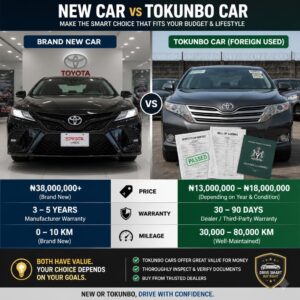
For context, a brand new Toyota Corolla Cross in Nigeria retails around ₦22–28 million, and a Tokunbo Toyota Camry 2018 can be found for ₦8–14 million. The EV price premium is real and significant.
Additionally, Nigeria currently applies import duties to electric vehicles that can add 20–35% to the CIF value. There are ongoing advocacy efforts for duty waivers to encourage EV adoption, but as of now, no comprehensive federal EV import duty waiver exists.
Battery Replacement Costs and Hot Climate Degradation
EV batteries are expensive. A Tesla Model 3 battery replacement, for example, can cost between $5,000–$20,000 USD depending on the model and capacity — that’s roughly ₦8,000,000–₦32,000,000 at current exchange rates.
Now add Nigeria’s climate factor: heat is an EV battery’s enemy. Sustained high ambient temperatures (Lagos regularly hits 30–35°C+) accelerate battery degradation. While modern EV batteries have sophisticated thermal management systems, the combination of heat and frequent deep-discharge cycles (from inconsistent charging patterns) can reduce battery lifespan faster than in cooler climates like Europe or North America.
This isn’t a dealbreaker, but it’s a cost and longevity factor you must factor into your total ownership calculation.
Spare Parts Availability and Technician Knowledge Gap
When your Tesla or BYD has a fault in Lagos today, where do you take it?
This is a critical and often overlooked challenge. Nigeria’s vast network of local mechanics — incredibly resourceful and skilled at keeping petrol cars running — largely lacks the specialized training, diagnostic tools, and parts inventory to service electric vehicles.
EV servicing requires:
- Specialized high-voltage safety training
- Proprietary diagnostic software (Tesla, for example, uses its own closed software ecosystem)
- Specific spare parts that are not locally stocked
Tesla doesn’t have an official service center in Nigeria. BYD is building its presence but service network depth remains limited. If your EV needs complex repairs, you’re potentially looking at expensive overseas parts shipments and long wait times.
This will improve over time as the market grows, but right now it’s a genuine operational risk.
Range Anxiety on Nigerian Highways
Most modern EVs offer a real-world range of 250–450 km on a full charge (depending on the model, speed, and air conditioning use). In theory, that’s more than enough for daily city driving.
But Nigeria’s highway reality introduces complications:
- Speed on Lagos–Ibadan expressway: Higher speeds drain batteries significantly faster
- Air conditioning: Nigeria’s heat means AC runs constantly, reducing range by 15–25%
- Road quality: Potholes and rough roads can affect vehicle efficiency
- No highway charging stations: If you run low between cities, there’s no rescue charging point
For intercity travel, range anxiety is a very real psychological and practical burden for Nigerian EV owners today.
Electric Cars Currently Available (or Accessible) in Nigeria
Tesla Models in Nigeria — Price, Availability, Reality
Tesla has no official Nigerian dealership. However, Teslas are regularly imported into Nigeria as tokunbo vehicles from the USA, UK, and Canada. The most common models you’ll encounter:
- Tesla Model 3: The most popular globally. Long Range version offers ~580 km range. Rear-wheel drive Standard Range offers ~450 km.
- Tesla Model Y: Tesla’s best-selling SUV globally. Offers more space and similar range to Model 3.
- Tesla Model S/X: Occasionally imported, much pricier, and rarer in Nigeria.
The challenge with Teslas in Nigeria: Software-locked features, no local service centers, and OTA (over-the-air) updates require stable internet connectivity. Tesla’s unique connector type also means finding compatible public chargers is harder.
BYD Electric Vehicles — The Chinese EV Giant Eyeing Africa
BYD (Build Your Dreams) is arguably the most strategically important EV brand for Nigeria’s EV future. Here’s why:
- BYD has been aggressively expanding across Africa, with assembly plants in South Africa and growing presence in Kenya, Ethiopia, and Egypt.
- Their vehicles are designed with emerging market pragmatism in mind — more affordable, robust, and supported by a growing dealer network.
- The BYD Atto 3 (an SUV) and BYD Seal (a sedan) are the most talked-about models for Nigeria.
- BYD has shown interest in Nigeria specifically, with several importers now bringing in vehicles.
Watch BYD closely. They may be the brand that genuinely cracks Nigeria’s EV market at scale.
Hyundai IONIQ and Kia EV6 — Korean Contenders
Hyundai and Kia, both part of the Hyundai Motor Group, have established dealer networks in Nigeria and offer excellent EVs:
- Hyundai IONIQ 5: Stunning design, 480–520 km range, ultra-fast charging capability (800V architecture). Priced in the higher band for Nigeria.
- Kia EV6: Similar platform, excellent range, multiple trim levels. Has won numerous global car of the year awards.
Having established dealers in Nigeria means these brands offer better service support prospects than Tesla — a meaningful advantage.
Tokunbo EVs: Buying a Used Electric Car in Nigeria
The used (tokunbo) EV market is where most Nigerian EV buyers will realistically enter the space. Key considerations:
Advantages of tokunbo EVs:
- Significantly lower purchase price
- You can access higher-spec models at mid-range prices
- Many tokunbo EVs from the USA have been well-maintained
Critical risks of tokunbo EVs:
- Battery health is everything. An EV with degraded battery capacity will have severely reduced range. Always request battery health reports.
- Unknown charging history — batteries that have been frequently fast-charged degrade faster
- Potential flood damage history (particularly for USA vehicles post-hurricane events)
- Warranty is usually voided upon importation
💡 CarWise Pro Tip: Before buying any tokunbo EV, insist on a professional battery diagnostic report. The battery health percentage directly determines the vehicle’s real-world range and remaining useful life. A Tesla with 80% battery health has essentially 20% less range than new — and that degradation will continue.
EV vs Petrol vs Hybrid: Which Makes More Sense for Nigeria Right Now?
Total Cost of Ownership Comparison Table
Let’s compare the realistic 5-year total cost of ownership for three vehicle profiles relevant to Nigerian buyers:
| Cost Category | Petrol Car (Toyota Camry 2.5L) | Full Hybrid (Toyota Camry Hybrid) | Electric Car (BYD Atto 3) |
|---|---|---|---|
| Purchase Price | ₦22,000,000 | ₦30,000,000 | ₦38,000,000 |
| Monthly Fuel/Energy Cost | ₦150,000 | ₦80,000 | ₦15,000–₦40,000* |
| 5-Year Fuel/Energy Cost | ₦9,000,000 | ₦4,800,000 | ₦900,000–₦2,400,000* |
| Annual Maintenance | ₦600,000 | ₦500,000 | ₦250,000 |
| 5-Year Maintenance | ₦3,000,000 | ₦2,500,000 | ₦1,250,000 |
| 5-Year Total Cost | ₦34,000,000 | ₦37,300,000 | ₦39,250,000–₦41,650,000 |
| Resale Value Estimate | Moderate | Good | Currently uncertain in Nigeria |
Energy cost assumes hybrid solar/grid charging setup.
Key insight from this data: Over 5 years, the total cost gap narrows dramatically between petrol and electric — and with further fuel price increases (a likely scenario in Nigeria), the EV math could flip decisively in favor of electric within the next 2–3 years.
The hybrid, interestingly, offers the best practical balance for Nigeria right now — fuel savings without the infrastructure dependency.
Who Should Actually Buy an Electric Car in Nigeria Today?
The Ideal Nigerian EV Buyer Profile
You should seriously consider buying an EV in Nigeria today if you:
✅ Live and primarily drive in Lagos or Abuja — where charging is more accessible and routes are more predictable
✅ Already have solar panels and battery storage — or have the capital to install them (making home charging reliable and virtually free)
✅ Drive mainly within the city — commutes under 100 km daily are well within any modern EV’s range comfort zone
✅ Have a second car — ideally a petrol or hybrid vehicle for long-distance travel while the EV handles urban duty
✅ Can afford the upfront cost — and have the financial cushion to handle unexpected repair costs
✅ Have access to a trusted EV specialist — or are tech-savvy enough to manage Tesla’s app-based diagnostics yourself
✅ Are a fleet manager for last-mile delivery — electric motorcycles and small EVs already make economic sense for urban delivery operations
✅ Are a tech entrepreneur or executive seeking both the economic and prestige benefits of EV ownership
Who Should Wait Before Buying an EV?
You should probably wait if you:
❌ Regularly drive long distances between cities (Lagos–Abuja, Lagos–Port Harcourt)
❌ Have no reliable home charging solution and depend entirely on public charging
❌ Are buying on a tight budget with no financial cushion for unexpected costs
❌ Live in a city other than Lagos or Abuja where EV infrastructure is essentially nonexistent
❌ Are buying a single vehicle that must serve all transportation purposes reliably
❌ Cannot afford downtime if your EV needs repairs that require overseas parts
What Nigeria Needs Before EVs Can Go Mainstream
For electric vehicles to move from a niche luxury to a mainstream option, Nigeria needs structural changes at multiple levels.
Government Policy and EV Import Duty Reform
The single biggest policy lever available to the Nigerian government is reducing or eliminating import duties on electric vehicles. Several African countries — including Kenya and Rwanda — have already taken this step, dramatically reducing the purchase price barrier.
Additionally, Nigeria needs:
- A national EV policy framework with clear targets and timelines
- Tax incentives for EV buyers — similar to the US federal EV tax credit model
- Regulations mandating EV charging facilities in new commercial and residential developments
- Investment in renewable energy to ensure that EVs are charged from clean sources
The Federal Ministry of Transportation has indicated interest in EV policy development, but concrete, implemented policies remain limited as of 2025.
Private Sector Investment in Charging Networks
Government alone cannot build Nigeria’s charging infrastructure. Private sector players need to step in aggressively. The business model is proven globally — charging networks can be profitable through per-kWh charging fees, subscription models, and partnerships with fuel stations, malls, hotels, and office complexes.
Companies like Ardova (formerly AP), Nipco, and MRS Oil — which operate the largest filling station networks in Nigeria — are natural candidates to become charging network operators. Some exploratory conversations are reportedly happening, but concrete networks remain limited.
Local EV Assembly and Manufacturing Prospects
Nigeria has an automotive assembly industry — with plants from Innoson Vehicle Manufacturing, Stallion Group (assembling Kia and Nissan), and others. The opportunity exists for these manufacturers to pivot toward EV assembly, particularly for smaller, more affordable EVs suited to Nigerian urban conditions.
Innoson Vehicle Manufacturing, Nigeria’s most prominent indigenous automaker, has made public statements about electric vehicle development. Watching this space is worthwhile — locally assembled EVs would carry significantly lower price tags than fully imported ones.
Expert Insights: What Automotive Analysts Are Saying About Nigeria’s EV Future
Automotive analysts studying African EV markets consistently highlight a few key themes relevant to Nigeria:
“Nigeria represents one of Africa’s most complex but potentially largest EV markets,” notes a pattern emerging from reports by the Africa EV & Mobility Association. The combination of massive urban populations, high fuel costs, and growing solar energy adoption creates a unique opportunity — but requires infrastructure investment that currently lags behind demand signals.
The Rocky Mountain Institute’s Africa Energy Portal analysis suggests that electric two-wheelers and three-wheelers (motorcycles and keke) represent the most immediate EV opportunity in markets like Nigeria — not passenger cars. The economics work better at smaller scale, the charging requirements are lower, and the total cost savings are more immediately impactful for lower-income users.
Meanwhile, global automotive consulting firms like McKinsey & Company project that Sub-Saharan Africa could see EV market share reach 5–8% by 2030 in urban markets, driven primarily by cost parity improvements as battery prices continue their decade-long decline. Battery pack prices have fallen from $1,200/kWh in 2010 to under $140/kWh in 2024 — a decline that continues to make EVs more affordable globally.
Practical Tips If You Decide to Buy an Electric Car in Nigeria
How to Set Up Home Charging in Nigeria
If you’re committed to EV ownership in Nigeria, home charging is your most important infrastructure investment. Here’s a practical setup guide:
Option 1: Standard AC Charging (Level 2)
- Install a dedicated 240V/32A circuit from your distribution board
- Purchase and install a quality home EV charger (EVSE) — brands like ABB, Wallbox, or Zaptec work well
- Cost: ₦500,000 – ₦1,500,000 for installation including electrician fees
- Charge time: Typically 8–12 hours for a full charge (perfect for overnight charging)
Option 2: Solar + Battery Storage + EV Charger (Recommended for Nigeria)
- Size your solar system to accommodate EV charging in addition to home loads
- A 10–15 kW solar array with 20–30 kWh battery storage is ideal
- Route EV charging to draw from solar battery storage during off-peak/overnight hours
- Total setup cost: ₦5,000,000 – ₦15,000,000 depending on system size
- Long-term energy costs approach zero, making EV operation incredibly cheap
Option 3: Generator Charging (Temporary/Emergency Only)
- Any EV can technically be charged via a properly connected generator
- Use a good-quality 5–10 kVA inverter generator for stable power output
- Not ideal as a primary solution — the generator fuel cost partially offsets EV savings
- Useful as a backup when solar isn’t sufficient and grid is unavailable
What to Check Before Buying a Tokunbo EV
Battery Health Report: Non-negotiable. Get a scan that shows state of health (SOH) percentage. Below 80% should significantly reduce your offer or walk away entirely.
Charging Port Condition: Check for physical damage or corrosion. Port repairs on EVs can be expensive.
Accident and Flood History: Request a CARFAX or AutoCheck report if the vehicle is from the USA. Flood-damaged EVs are extremely risky due to battery and electrical system corrosion.
Software Status: Ensure the vehicle’s software is up to date. Some features on certain EVs are software-locked and may require manufacturer activation.
Service History: Ask for charging history data if available. Vehicles that were frequently fast-charged exclusively may have faster battery degradation.
Cooling System Check: EV battery cooling systems must function perfectly. Have a technician check coolant levels and system function.
The Future Outlook — Nigeria’s EV Journey from 2025 to 2030
Here’s a realistic picture of where Nigeria’s EV journey is likely headed over the next five years:
2025–2026:
- Continued growth in tokunbo EV imports (Tesla, BYD, Hyundai)
- More formal dealerships entering the market (BYD likely to formalize presence)
- Electric two-wheelers and three-wheelers scale significantly (driven by companies like MAX.ng and Moove)
- First private charging networks begin appearing in Lagos and Abuja
- Government policy discussions progress, possibly resulting in pilot duty waivers
2027–2028:
- First charging corridor on Lagos–Ibadan expressway potentially established
- BYD or similar brand potentially achieves local assembly in Nigeria
- EV battery prices globally drop below $100/kWh — making EVs price-competitive with petrol cars globally
- Nigerian EV fleet potentially reaches 5,000–15,000 vehicles
2029–2030:
- Mainstream EV awareness and adoption accelerating
- Recognizable public charging network in Lagos and Abuja
- EV-trained mechanics becoming available at scale
- PHEVs potentially achieving meaningful market share as a transition technology
- First-generation Nigerian EV owners beginning to share long-term ownership data and experiences
Nigeria’s EV journey won’t happen overnight. But it is happening — and the window to be an early, informed adopter is open right now for those with the right circumstances and financial position.
Conclusion: Should You Buy an Electric Car in Nigeria Right Now?
After all of this analysis, here’s our honest, practical verdict from CarWise.ng:
For most Nigerians today? Not yet — but the timing depends entirely on your specific circumstances.
If you live in Lagos or Abuja, have a reliable home solar charging setup, primarily drive within the city, can afford the upfront premium, and have a second vehicle for long-distance needs — then yes, buying an EV today makes genuine sense. You’ll save significantly on fuel, enjoy a superior driving experience, and position yourself ahead of a market transition that is undeniably coming.
But if you’re a single-vehicle household driving across multiple Nigerian states, without reliable charging infrastructure, on a budget that doesn’t accommodate unexpected EV repair costs — the wiser move today is a fuel-efficient petrol car or better yet, a full hybrid like a Toyota Camry Hybrid or Lexus RX 450h. You get meaningful fuel savings without the infrastructure dependency.
The EV revolution is absolutely real. It’s coming to Nigeria. The question isn’t if — it’s when and for whom right now.
What’s undeniable is this: the Nigerians who educate themselves about EVs today, understand the technology, monitor the infrastructure development, and position themselves to make informed purchasing decisions will be the ones who benefit most when the tipping point arrives.
And that tipping point? Based on everything we know about global battery price trajectories, Nigeria’s fuel cost trajectory, and the acceleration of EV infrastructure investment across Africa — it’s closer than most people think.
Stay informed. Stay CarWise.
Frequently Asked Questions (FAQs)
1. Can I charge an electric car in Nigeria if there’s no public charging station near me?
Yes, and most Nigerian EV owners actually charge at home rather than using public stations. The most practical setup is a home solar + battery storage system that charges your EV overnight. You can also charge using your generator as a backup, though this is not the most cost-effective primary solution. Installing a dedicated Level 2 home charger (a wall-mounted charging unit) with your solar system gives you the most reliable, cost-effective charging experience. Public charging infrastructure in Nigeria is limited but growing, primarily in Lagos and Abuja.
2. How much does it cost to import an electric car into Nigeria?
The total cost depends on the vehicle’s original price, current USD/NGN exchange rate, shipping costs, Nigerian customs duties, port charges, and clearing agent fees. As a general guide: import duties on electric vehicles in Nigeria currently range from 20–35% of the CIF (Cost, Insurance, and Freight) value. For a Tesla Model 3 with a USD value of $25,000–$35,000, total landed cost in Nigeria can reach ₦28,000,000–₦50,000,000 or more. Always work with a reputable clearing agent and obtain a comprehensive cost breakdown before committing to an import.
3. What happens if my electric car battery dies completely in Nigeria? Is there a risk of being stranded?
Modern electric vehicles have multiple layers of protection before the battery reaches zero. You’ll receive dashboard warnings, app notifications, and range estimates that become increasingly urgent as the battery depletes. If you do manage the battery down to zero, the car will typically roll to a very slow crawl (sometimes called “turtle mode”) before stopping completely. In that scenario in Nigeria today, your options are: calling a flatbed tow truck (EVs cannot be flat-towed in most cases), using a mobile charging unit (rare in Nigeria currently), or being transported to the nearest charging point. This is why range management and planning are critical skills for Nigerian EV owners today.
4. Are there any electric cars under ₦20 million available in Nigeria?
Currently, finding a reliable, properly documented electric vehicle under ₦20 million in Nigeria is very challenging for full-size passenger cars. However, the used (tokunbo) market occasionally surfaces older Tesla Model 3 units, early Nissan Leafs, or Chevrolet Bolts in this price range. The Nissan Leaf, in particular, is worth investigating — it’s one of the world’s most popular affordable EVs, and older 2016–2018 models with smaller batteries occasionally appear in the ₦10–15 million range. However, battery health on older Leafs can be a significant concern and must be carefully evaluated. As BYD and similar brands formalize their Nigerian presence, more affordable new EV options should emerge within the next 2–3 years.
5. Do electric cars work well in Nigeria’s extreme heat?
This is a valid concern. Sustained heat above 30°C does affect EV battery performance and long-term health. However, modern electric vehicles — particularly Tesla, Hyundai IONIQ, and BYD models — have sophisticated active thermal management systems that use liquid cooling to maintain battery temperatures within safe operating ranges, even in hot climates. The concern is greater for older EVs like the Nissan Leaf, which uses passive (air) cooling and degrades faster in hot climates. As long as you choose an EV with active battery thermal management and avoid leaving the vehicle parked without climate pre-conditioning in direct sun for extended periods, heat management is a manageable — though real — consideration for Nigerian conditions.
6. Can Nigerian mechanics service electric vehicles, or do I need special technicians?
Currently, the vast majority of Nigeria’s traditional mechanics are not equipped to service electric vehicles. High-voltage EV systems require specialized safety training, specific tools, and diagnostic software that is not yet widespread in Nigeria’s auto repair industry. However, this is rapidly changing. Several technical training organizations and a growing number of forward-thinking mechanics are beginning to acquire EV servicing skills. For Tesla owners specifically, the Tesla app provides significant remote diagnostic capability. For the foreseeable future, Nigerian EV owners should factor in the higher cost and potential inconvenience of finding qualified EV technicians into their ownership calculations. This situation will improve significantly over the next 3–5 years as the EV fleet grows.
7. Is it better to buy a hybrid or an electric car for Nigeria right now?
For most Nigerians today, a full hybrid (like the Toyota Camry Hybrid or Lexus ES 300h) represents the most practical choice. Here’s why: full hybrids require no external charging infrastructure (they charge themselves), offer meaningfully better fuel economy than conventional petrol cars (often 40–60% better), are already widely supported by Nigerian mechanics and spare parts suppliers, and come at a lower price premium than full EVs. A plug-in hybrid (PHEV) is a step up — offering short-range electric driving with petrol backup — but requires access to charging. A full BEV is the best long-term choice economically but requires the right lifestyle and infrastructure to make sense today in Nigeria.
8. Does Nigeria have any government incentives for buying electric cars?
As of 2025, Nigeria does not have a comprehensive federal incentive program specifically for electric vehicle purchases comparable to the US EV tax credit or European EV subsidies. There have been policy discussions and proposals, including potential import duty waivers for EVs, but no fully implemented federal framework exists yet. Some state-level initiatives are beginning to emerge in Lagos and Abuja. This is an area to monitor closely — as global and continental pressure mounts for EV adoption, and as Nigeria’s fuel import bill remains a major economic burden, government policy incentives become increasingly likely in the near to medium term.
9. What is the resale value of electric cars in Nigeria?
This is one of the most uncertain aspects of EV ownership in Nigeria today. Because the EV resale market is still in its infancy, resale values are difficult to predict reliably. Globally, some EVs (particularly Teslas) have held value well in markets with strong demand, while others have seen significant depreciation. In Nigeria specifically, the small size of the secondary EV market means you may face challenges finding buyers at your target price if you decide to sell. Battery health will be the dominant factor in resale pricing — a well-documented EV with high battery health will always command a premium over one with unknown history. As the Nigerian EV market matures, resale value predictability will improve.
10. Which electric car is best suited for Nigerian conditions today?
Based on our analysis of Nigerian road conditions, climate, infrastructure, and support networks, the BYD Atto 3 and Tesla Model Y emerge as the most suitable options for Nigerian EV buyers who are committed to the purchase today. The BYD Atto 3 offers a pragmatic combination of reasonable range (400+ km), active thermal management, growing dealer support, and a more accessible price point. The Tesla Model Y offers superior technology, range, and the benefits of Tesla’s global software ecosystem — but at a higher price and with limited local service support. The Hyundai IONIQ 5 is also excellent, with the advantage of an established Hyundai dealer network in Nigeria.
Published by CarWise.ng — Nigeria’s Most Trusted Automotive Resource
Category: Automotive Technology | Electric Vehicles | Car Buying Guide
Last Updated: 2025