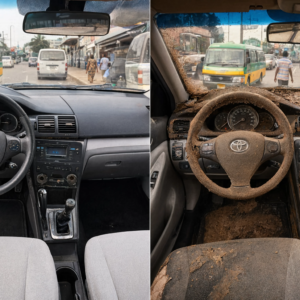
Cheapest Cars with Low Maintenance Costs in Nigeria (2025 Guide)
Let’s be honest with each other for a second.
In Nigeria today, buying a car is only half the battle. The real fight starts the moment you drive off the lot — and the bills start rolling in. Fuel. Engine oil. Tyres. Brake pads. Alternator. Radiator. Water pump. Suspension arms. And that’s before we even talk about the mechanic’s labour charge.
The painful truth is that many Nigerians focus entirely on the purchase price of a vehicle and completely ignore what it costs to keep that vehicle alive. Someone buys a flashy European car for ₦3.5 million, and within eighteen months, they’ve spent another ₦2 million keeping it on the road. The car looked like a bargain — until it wasn’t.
So here’s the smarter question to ask before you buy any car in Nigeria: “How much will this car actually cost me every year?”
That’s exactly what this guide answers.
We’ve researched, compared, and ranked the cheapest cars with low maintenance costs in Nigeria in 2025 — looking at spare parts availability, fuel economy, mechanic familiarity, reliability records, and real ownership costs. Whether you’re a first-time buyer, a daily commuter in Lagos or Abuja, a ride-hailing driver, or simply someone trying to stretch their naira further, this guide is built for you.
Let’s get into it.
Why Maintenance Costs Matter More Than the Purchase Price
Most car buying conversations in Nigeria start and end with one question: “How much is the car?”
That question matters, yes. But it’s incomplete.
Think of it this way. A car is not a one-time purchase. It’s a long-term financial commitment — similar to renting an apartment. The “rent” you pay every month comes in the form of fuel, engine oil changes, brake pad replacements, tyre rotations, minor repairs, and the occasional major fix. Over three to five years, these costs can easily exceed your original purchase price.
The True Cost of Car Ownership in Nigeria
Here’s a realistic breakdown of what car ownership costs in Nigeria annually, beyond just the purchase price:
| Cost Category | Low-Maintenance Car | High-Maintenance Car |
|---|---|---|
| Fuel (monthly) | ₦50,000 – ₦80,000 | ₦90,000 – ₦150,000+ |
| Engine oil change (quarterly) | ₦15,000 – ₦25,000 | ₦35,000 – ₦80,000 |
| Brake pads (annually) | ₦15,000 – ₦30,000 | ₦50,000 – ₦150,000 |
| Tyres (every 2 years) | ₦80,000 – ₦150,000 | ₦200,000 – ₦500,000+ |
| Minor repairs (annually) | ₦50,000 – ₦100,000 | ₦200,000 – ₦600,000+ |
| Estimated Annual Total | ₦300,000 – ₦550,000 | ₦700,000 – ₦1,800,000+ |
Figures are approximate and based on 2024–2025 Nigerian market conditions.
The gap is enormous. And this difference isn’t about the cars being “old” or “new” — it’s about the brand, model, and how widely supported it is in the Nigerian market.
What Makes a Car Cheap to Maintain?
A car is considered cheap to maintain in Nigeria when it checks most or all of these boxes:
- Readily available spare parts at Ladipo, Aspanda, Trade Fair, or local auto markets nationwide
- High fuel efficiency — meaning fewer trips to the filling station
- Simple, familiar engine technology that most Nigerian mechanics can work on without specialized tools
- Strong brand presence in Nigeria, meaning more competition among parts dealers (which keeps prices low)
- Proven reliability and low frequency of breakdowns
- Affordable consumables — oil, filters, belts, brake pads — that don’t require imports
Keep these six criteria in mind as you read through our list. They explain exactly why certain cars dominate Nigeria’s roads and why others quietly drain their owners’ bank accounts.
Key Factors We Used to Evaluate These Cars
Before we hand you the list, let’s be transparent about how we arrived at our rankings. We didn’t just pick popular cars. We applied real, Nigeria-specific evaluation criteria.
Spare Parts Availability in Nigeria
This is arguably the single most important factor for Nigerian car owners. A car can be the most reliable machine in the world, but if you can’t find a replacement water pump or alternator in Aba, Kano, or Ibadan, you’re in trouble.
We specifically favoured cars whose spare parts are:
- Stocked in major auto markets across Nigeria (Lagos, Abuja, Port Harcourt, Kano, Enugu)
- Affordable relative to the car’s overall value
- Available as both OEM (original equipment manufacturer) and quality aftermarket alternatives
Fuel Economy and Petrol Costs
With petrol prices in Nigeria now hovering between ₦600 and ₦1,100 per litre (depending on your location and the current subsidy situation), fuel economy is no longer a “nice to have” — it’s survival arithmetic.
We prioritised cars that deliver at least 12–15 km per litre under Nigerian road conditions, which are admittedly harsher than the lab conditions manufacturers use for official ratings.
Mechanic Familiarity and Repair Ease
A car that requires a dealer-level diagnostic computer to change a spark plug is a liability in Nigeria. We looked at cars that the average Nigerian mechanic — from a roadside vulcanizer to a trained technician — can service comfortably without expensive specialized equipment.
Reliability and Breakdown Frequency
We factored in long-term owner feedback, J.D. Power reliability rankings, Consumer Reports data (where applicable), and real-world Nigerian owner testimonials to identify cars that don’t frequently break down under the stresses of Nigerian roads — bad surfaces, heat, traffic, and the occasional flooded road during rainy season.
The Cheapest Cars with Low Maintenance Costs in Nigeria (2025 List)
Here are our top picks, combining affordability, reliability, and the lowest realistic maintenance costs for Nigerian conditions.
1. Toyota Corolla (Tokunbo, 2003–2014)
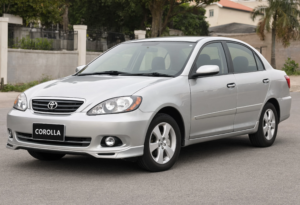
Estimated Purchase Price: ₦1.8 million – ₦5.5 million (depending on year and condition)
Fuel Economy: 13–16 km/litre (city conditions)
Maintenance Cost Rating: ⭐⭐⭐⭐⭐ (Excellent)
If there’s one car that was practically engineered for the Nigerian market — even though Toyota had no such intention — it’s the Corolla. It is, without any exaggeration, the most popular and best-supported sedan on Nigerian roads.
Walk into any auto parts market in Nigeria and ask for a Corolla alternator, water pump, or clutch plate, and you’ll have three different sellers competing for your business within sixty seconds. Parts are cheap, plentiful, and available in OEM and aftermarket variants.
The 1ZZ-FE and 2ZZ-GE engines found in 2003–2008 Corollas are among the most well-understood engines by Nigerian mechanics. The 2009–2013 generation (the famous “muscle Corolla”) is equally loved for its robustness.
Why it wins:
- Massive nationwide spare parts ecosystem
- Outstanding long-term reliability
- Simple engine architecture — no complicated turbos or direct injection systems
- Resale value remains strong, making it a sound investment
Watch out for: Rust on older models (especially around the wheel arches), and transmission slipping on high-mileage units. Always inspect carefully before buying.
2. Honda Fit (Jazz) — 2004–2014
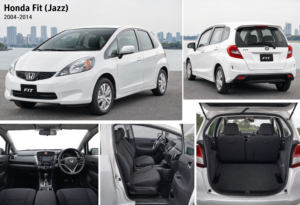
Estimated Purchase Price: ₦1.5 million – ₦3.8 million
Fuel Economy: 14–18 km/litre
Maintenance Cost Rating: ⭐⭐⭐⭐⭐ (Excellent)
The Honda Fit — sold in some markets as the Honda Jazz — is a small hatchback that punches well above its weight in terms of practicality, fuel economy, and reliability. It’s powered by Honda’s L13A or L15A engine, a small, lightweight 1.3L or 1.5L unit that sips fuel politely and rarely demands expensive attention.
Nigerian mechanics are highly familiar with Honda Fit engines, and spare parts are readily available in Lagos, Abuja, and Port Harcourt markets. The Fit’s genius lies in its “Magic Seat” system — a folding rear seat arrangement that creates surprisingly generous cargo space — making it popular for small business owners who need a dual-purpose personal and utility vehicle.
Why it wins:
- Exceptional fuel economy (best in class for daily commuting)
- Small engine = cheaper consumables (oil, filters, spark plugs)
- Compact size = cheaper tyres
- Very reliable CVT or manual gearbox options
Watch out for: CVT (automatic) versions can be expensive to repair if neglected. Change the CVT fluid every 40,000 km without fail.
3. Toyota Yaris (2006–2014)
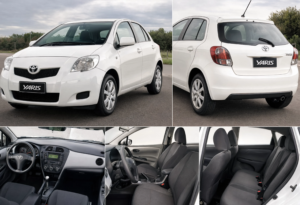
Estimated Purchase Price: ₦1.4 million – ₦3.2 million
Fuel Economy: 14–17 km/litre
Maintenance Cost Rating: ⭐⭐⭐⭐½
The Toyota Yaris is smaller than the Corolla but carries the same legendary Toyota DNA — bulletproof reliability, simple mechanicals, and a vast parts ecosystem. Its 1.0L and 1.3L engines are among the most fuel-efficient petrol engines you’ll find in the Nigerian used car market.
For anyone who primarily drives within a city — Lagos Island, Wuse in Abuja, GRA in Port Harcourt — the Yaris is practically perfect. It’s small enough to navigate tight traffic, light enough to be easy on fuel, and reliable enough to require minimal workshop visits.
Why it wins:
- Toyota parts availability (one of the best-supported brands in Nigeria)
- Tiny engine means lower oil consumption and cheaper servicing
- Easy to park in congested urban environments
- Well-suited to first-time drivers
Watch out for: Ground clearance is low, making it less suitable for seriously bad roads or waterlogged areas during rainy season.
4. Suzuki Alto (2009–2018)
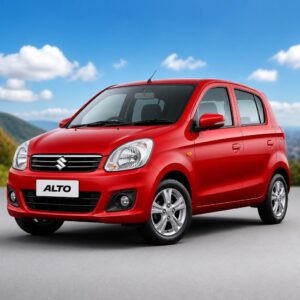
Estimated Purchase Price: ₦900,000 – ₦2.2 million
Fuel Economy: 18–22 km/litre
Maintenance Cost Rating: ⭐⭐⭐⭐ (Very Good)
The Suzuki Alto is arguably the most fuel-efficient car on this list and also one of the cheapest to purchase. Its tiny 800cc or 1.0L engine consumes almost embarrassingly little petrol — making it a favourite for people whose primary concern is fuel economy above all else.
While Suzuki isn’t as dominant as Toyota or Honda in Nigeria’s parts market, the Alto’s parts have become significantly more available in recent years, particularly in Lagos and Abuja markets. Its mechanical simplicity — there’s genuinely not much that can go wrong — keeps repair costs low even when something does need attention.
Why it wins:
- Best-in-class fuel economy on this list
- Lowest purchase price on this list
- Extremely simple engine — cheap to service
- Perfect for Lagos/Abuja city driving
Watch out for: Very limited ground clearance. It genuinely struggles on bad roads. Best suited for relatively maintained urban roads. Also not ideal for highways where consistent high-speed driving can stress the small engine.
5. Hyundai Elantra (2011–2016)
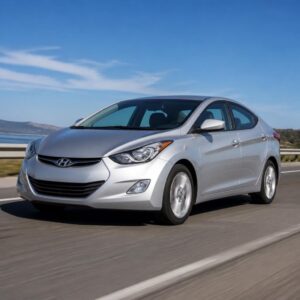
Estimated Purchase Price: ₦2.2 million – ₦5.0 million
Fuel Economy: 12–15 km/litre
Maintenance Cost Rating: ⭐⭐⭐⭐ (Very Good)
Hyundai has made enormous strides in Nigeria’s market over the past decade, and the Elantra has become the brand’s most popular sedan in the country. The result? A growing and increasingly affordable spare parts ecosystem specifically for the Elantra.
The 2011–2016 generation (the sixth generation Elantra) is particularly well-regarded for its modern yet straightforward engine technology, spacious interior, and better-than-average ride quality on Nigerian roads. It’s a step up in comfort from the Corolla and Yaris while remaining genuinely affordable to maintain.
Why it wins:
- Comfortable ride quality — better than Toyota Corolla in many respects
- Modern safety features (airbags, ABS) at a budget price
- Growing spare parts availability across Nigeria
- Stylish interior that doesn’t feel like a compromise
Watch out for: Avoid the turbocharged variants (1.6T GDI) — stick to the naturally aspirated 1.6L or 2.0L versions for simpler, cheaper maintenance.
6. Nissan Almera (2000–2012)
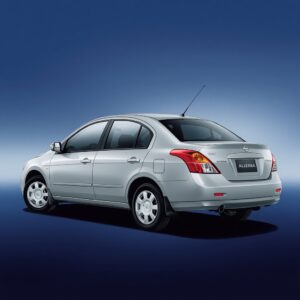
Estimated Purchase Price: ₦1.2 million – ₦3.0 million
Fuel Economy: 12–14 km/litre
Maintenance Cost Rating: ⭐⭐⭐⭐ (Very Good)
The Nissan Almera is one of Nigeria’s most underrated budget sedans. It’s been on Nigerian roads for decades, which means mechanics know it inside out and parts dealers stock it in every major market. The older generation (2000–2006) is particularly popular because of its rugged simplicity and the near-indestructibility of its 1.4L and 1.6L engines.
If you’re on a tight budget and need something that will reliably get you from Point A to Point B with minimal drama, the Almera deserves serious consideration. It’s not glamorous — but it’s genuinely practical.
Why it wins:
- Extremely cheap to buy
- Nissan parts widely available at Nigerian auto markets
- Very simple, robust engine technology
- Good for budget-conscious first-time buyers
Watch out for: The suspension system takes a beating on rough Nigerian roads. Budget for suspension repairs (shocks, ball joints) if buying an older model.
7. Honda Civic (Tokunbo, 2001–2011)
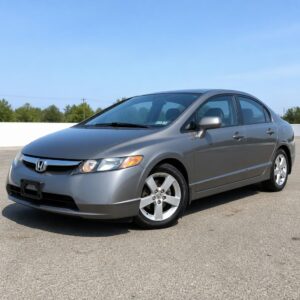
Estimated Purchase Price: ₦1.8 million – ₦4.5 million
Fuel Economy: 12–15 km/litre
Maintenance Cost Rating: ⭐⭐⭐⭐ (Very Good)
The Honda Civic enjoys cult-like status in Nigeria — and for good reason. Honda’s reputation for engine reliability is second only to Toyota in the Nigerian market, and the Civic benefits from that reputation fully. The 2001–2011 generations (seventh and eighth gen) are the sweet spots — simple enough to maintain affordably but modern enough to offer decent comfort and features.
Civic parts are widely stocked across Nigeria’s auto markets, particularly in Lagos’ Ladipo Market and Abuja’s Dei-Dei auto market. The 1.4L and 1.6L versions are particularly economical on fuel.
Why it wins:
- Honda reliability legend — fewer unexpected breakdowns
- Wide parts availability
- Strong resale value
- Great driving experience even in traffic
Watch out for: Avoid the Si (turbocharged) or Type R variants — they’re fun but expensive to maintain. Stick to the standard 1.4L or 1.6L VTEC engines.
8. Kia Picanto (2007–2017)
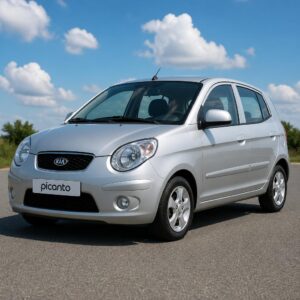
Estimated Purchase Price: ₦1.1 million – ₦2.8 million
Fuel Economy: 15–19 km/litre
Maintenance Cost Rating: ⭐⭐⭐½
The Kia Picanto is a city car that makes an excellent budget option for Nigerian drivers who primarily operate within urban centres. Its 1.0L or 1.2L engine is extremely frugal with fuel, and Kia’s growing presence in Nigeria means parts availability has improved significantly, particularly for this model.
It’s small, efficient, easy to park, and cheap to run. For someone whose priority is getting to work and back every day without spending a fortune on petrol or repairs, the Picanto is a genuinely smart choice.
Why it wins:
- Very affordable purchase price
- Excellent fuel economy
- Easy to handle in traffic
- Growing Kia parts availability in Lagos and Abuja
Watch out for: Limited cargo space and a small cabin can feel cramped for taller drivers or families. Also, older models (pre-2010) may be harder to source parts for in smaller Nigerian cities.
9. Toyota Camry (2002–2006, “Big Daddy” Generation)
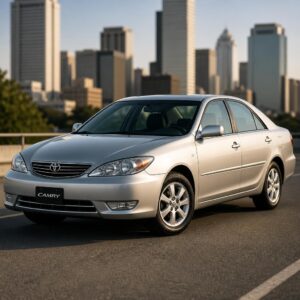
Estimated Purchase Price: ₦2.0 million – ₦4.5 million
Fuel Economy: 11–14 km/litre
Maintenance Cost Rating: ⭐⭐⭐⭐½
Before anyone raises an eyebrow at the Camry appearing on a “cheap to maintain” list — hear us out. The 2002–2006 generation Camry (locally called the “Big Daddy” or “Muscle Camry”) has been in Nigeria so long, and in such massive numbers, that its maintenance ecosystem is extraordinarily well-developed.
Parts are incredibly cheap and available everywhere. Every mechanic in Nigeria has worked on this engine dozens, if not hundreds, of times. The 2.4L 2AZ-FE engine in these models is bombproof when properly maintained. You can get a quality alternator for under ₦25,000. A water pump is under ₦15,000 at Ladipo. These numbers are genuinely remarkable for a mid-size saloon.
Why it wins:
- Legendary parts availability and affordability in Nigeria
- Comfortable, spacious interior — much more than subcompacts
- Deeply familiar to Nigerian mechanics
- Good fuel economy for its size
- Very strong resale value
Watch out for: Oil consumption issues on some high-mileage 2AZ-FE engines. Check for white smoke from the exhaust and inspect oil level before purchase.
10. Volkswagen Polo (2002–2012)
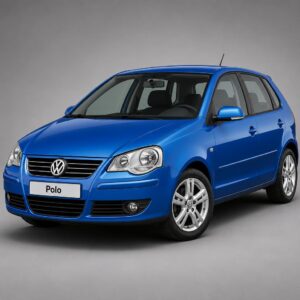
Estimated Purchase Price: ₦1.5 million – ₦3.5 million
Fuel Economy: 13–16 km/litre
Maintenance Cost Rating: ⭐⭐⭐ (Good, with caveats)
We’re including the VW Polo here because it genuinely offers low running costs when maintained correctly — but it comes with an important caveat: it requires more mechanical discipline than the Japanese options on this list.
The Polo’s 1.4L and 1.6L petrol engines are relatively simple, fuel-efficient, and European-reliable when serviced regularly with quality parts. Parts availability has improved significantly in Nigeria over the past few years, particularly in Lagos. However, if you ignore service intervals with a Polo, costs escalate quickly.
Why it wins:
- Excellent build quality and driving refinement
- Good fuel economy
- Stylish design that retains appeal
- Parts improving in availability
Watch out for: Avoid diesel or turbocharged variants. Stick to the naturally aspirated petrol engines. Do not miss service intervals — this car punishes neglect more harshly than its Japanese counterparts.
Side-by-Side Comparison Table: Cheapest Cars to Maintain in Nigeria
| Car Model | Est. Buy Price (₦) | Fuel Economy (km/L) | Parts Availability | Mechanic Familiarity | Annual Maintenance Est. (₦) | Overall Rating |
|---|---|---|---|---|---|---|
| Toyota Corolla (2003–2014) | 1.8M – 5.5M | 13–16 | ⭐⭐⭐⭐⭐ | ⭐⭐⭐⭐⭐ | 200,000 – 400,000 | 🏆 Best Overall |
| Honda Fit (2004–2014) | 1.5M – 3.8M | 14–18 | ⭐⭐⭐⭐⭐ | ⭐⭐⭐⭐⭐ | 180,000 – 350,000 | 🏆 Best Fuel Economy |
| Toyota Yaris (2006–2014) | 1.4M – 3.2M | 14–17 | ⭐⭐⭐⭐⭐ | ⭐⭐⭐⭐⭐ | 180,000 – 320,000 | Best City Car |
| Suzuki Alto (2009–2018) | 900K – 2.2M | 18–22 | ⭐⭐⭐ | ⭐⭐⭐ | 150,000 – 280,000 | Cheapest to Run |
| Hyundai Elantra (2011–2016) | 2.2M – 5.0M | 12–15 | ⭐⭐⭐⭐ | ⭐⭐⭐⭐ | 220,000 – 420,000 | Best Comfort |
| Nissan Almera (2000–2012) | 1.2M – 3.0M | 12–14 | ⭐⭐⭐⭐ | ⭐⭐⭐⭐ | 200,000 – 380,000 | Best Value Buy |
| Honda Civic (2001–2011) | 1.8M – 4.5M | 12–15 | ⭐⭐⭐⭐ | ⭐⭐⭐⭐⭐ | 210,000 – 400,000 | Best Driver’s Car |
| Kia Picanto (2007–2017) | 1.1M – 2.8M | 15–19 | ⭐⭐⭐ | ⭐⭐⭐ | 160,000 – 300,000 | Best First Car |
| Toyota Camry (2002–2006) | 2.0M – 4.5M | 11–14 | ⭐⭐⭐⭐⭐ | ⭐⭐⭐⭐⭐ | 220,000 – 430,000 | Best Spacious Option |
| Volkswagen Polo (2002–2012) | 1.5M – 3.5M | 13–16 | ⭐⭐⭐ | ⭐⭐⭐ | 250,000 – 500,000 | Best European Option |
Toyota vs Honda vs Hyundai — Which Brand Costs Less to Maintain in Nigeria?
This is one of the most hotly debated questions among Nigerian car buyers. Let’s settle it with facts.
Toyota edges out the competition primarily because of unmatched parts availability and mechanic familiarity. Whether you’re in Maiduguri, Onitsha, or Warri, you’ll find Toyota parts and a mechanic who knows Toyota engines. This nationwide support network is Toyota’s biggest advantage in Nigeria — not just engineering quality.
Honda is a very close second. Honda engines are extraordinarily reliable and fuel-efficient. Parts are widely available in major cities. The slight disadvantage is that Honda’s CVT transmissions (in the Fit and Civic) can be expensive to repair if fluid changes are neglected — but this is entirely avoidable with proper maintenance.
Hyundai has improved dramatically in recent years and now represents excellent value. The brand’s growing dealer network and improving parts availability make modern Hyundai models increasingly competitive. However, parts for older models can still be harder to source in smaller cities.
The verdict: For the lowest possible maintenance costs across all Nigerian locations, Toyota wins. For the best combination of fuel economy and reliability in major cities, Honda is an equally strong choice. For anyone prioritizing modern features and comfort at a budget price, Hyundai is an excellent third option.
Estimated Annual Maintenance Costs Breakdown
Understanding exactly what you’ll spend on maintenance helps you budget accurately. Here’s a realistic breakdown for a typical low-maintenance car (using a Toyota Corolla as the baseline example):
Routine Servicing Costs
| Service | Frequency | Estimated Cost (₦) |
|---|---|---|
| Engine oil + filter change | Every 5,000 km | 12,000 – 22,000 |
| Air filter replacement | Every 15,000 km | 3,000 – 8,000 |
| Spark plugs | Every 30,000 km | 8,000 – 20,000 |
| Fuel filter | Every 30,000 km | 5,000 – 12,000 |
| Coolant flush | Every 40,000 km | 8,000 – 15,000 |
| Transmission fluid | Every 40,000 km | 10,000 – 25,000 |
| Brake fluid | Every 2 years | 5,000 – 10,000 |
Spare Parts Pricing in Nigeria (Approximate 2025 Market Rates)
| Part | Toyota Corolla | European Equivalent |
|---|---|---|
| Alternator | ₦18,000 – ₦35,000 | ₦65,000 – ₦150,000 |
| Water pump | ₦12,000 – ₦25,000 | ₦45,000 – ₦120,000 |
| Brake pads (front set) | ₦8,000 – ₦18,000 | ₦25,000 – ₦70,000 |
| Shock absorber (each) | ₦15,000 – ₦35,000 | ₦50,000 – ₦180,000 |
| Radiator | ₦25,000 – ₦60,000 | ₦80,000 – ₦250,000 |
| Starter motor | ₦18,000 – ₦40,000 | ₦60,000 – ₦160,000 |
Parts prices vary by market location, supplier, and whether OEM or aftermarket.
Common Repair Jobs and Their Approximate Costs
| Repair | Estimated Total Cost (Labour + Parts) |
|---|---|
| Full brake service (pads + rotors) | ₦35,000 – ₦80,000 |
| AC regas + service | ₦25,000 – ₦60,000 |
| Full shock absorber replacement (4 units) | ₦80,000 – ₦180,000 |
| Timing belt replacement | ₦40,000 – ₦120,000 |
| Clutch replacement (manual) | ₦60,000 – ₦150,000 |
| Engine mount replacement | ₦25,000 – ₦60,000 |
Best Cheap Cars for Specific Needs in Nigeria
Best Cheap Car for Daily Lagos/Abuja Commute
Winner: Honda Fit or Toyota Yaris
In the brutal stop-and-go traffic of Lagos Third Mainland Bridge or Abuja’s Airport Road, fuel efficiency is king. The Honda Fit’s exceptional fuel economy — up to 18 km per litre with careful driving — combined with its compact size makes it ideal for urban commuting. The Toyota Yaris is an equally strong contender.
Best Cheap Car for Long-Distance Driving
Winner: Toyota Corolla or Toyota Camry (2002–2006)
For regular Lagos-Ibadan, Abuja-Kaduna, or Benin-Asaba drives, you want something with a bit more engine capacity for comfortable highway cruising, strong reliability, and excellent road manners. The Corolla and “Big Daddy” Camry both deliver — and if something goes wrong on the road, you’ll almost certainly find parts and a mechanic in any town along the route.
Best Cheap Car for First-Time Buyers
Winner: Toyota Yaris or Kia Picanto
First-time buyers need something forgiving, easy to handle, and cheap enough that early ownership mistakes (minor scrapes, learning experiences) don’t cause financial heartache. Both the Yaris and Picanto are compact, easy to park, and cheap to repair after the inevitable minor mishap.
Best Cheap Car for Small Business or Ride-Hailing
Winner: Toyota Corolla or Honda Civic
For Bolt, InDrive, or Uber drivers, the car needs to handle high mileage gracefully, be cheap enough to maintain at scale, and comfortable enough that passengers rate you five stars. The Corolla and Civic win this category comfortably. Both handle high mileage well, maintain reasonable fuel economy, and have the parts ecosystem to support rapid, affordable repairs.
Where to Buy Cheap Low-Maintenance Cars in Nigeria
Tokunbo Car Markets to Visit
If you’re in the market for a reliable, affordable used car in Nigeria, these are the most reputable markets:
- Ladipo Auto Spare Parts Market, Lagos — Largest auto parts and used car market in Nigeria. Excellent for parts and used vehicle deals.
- Aspanda Industrial Estate, Lagos — Specializes in auto parts and imports.
- Trade Fair Complex, Lagos — Large and diverse automotive market.
- Dei-Dei International Market, Abuja — The North’s largest auto market with solid vehicle and parts selection.
- Upper Iweka Road, Onitsha — Popular in the East for affordable used vehicles.
- Kasuwan Motoci, Kano — Popular northern market for vehicles and parts.
Tips for Inspecting a Used Car Before Buying
Never buy a tokunbo car without doing these first:
- Check the engine bay for oil leaks, rust, or signs of recent paint (which could hide damage)
- Start the engine cold — cold starts reveal a lot about engine health
- Listen for unusual noises — knocking, ticking, or rattling are red flags
- Test the air conditioning — AC repairs are expensive; ensure it blows cold
- Check the chassis number (VIN) against the vehicle’s documents
- Take it for an extended test drive — at least 20 minutes, including highway speeds
- Have an independent mechanic inspect it before finalizing any purchase — this ₦5,000–₦10,000 inspection can save you millions
💡 Pro Tip: Never buy a car in a hurry. Pressure to buy quickly is always a red flag. A good car will still be available tomorrow.
How to Keep Your Car’s Maintenance Costs as Low as Possible
Buying a low-maintenance car is only step one. How you manage it determines whether the savings actually materialize. Here are the habits that separate smart Nigerian car owners from those constantly bleeding money at the mechanic:
Stick to Your Service Schedule
This is the single most impactful thing you can do. Engine oil changes every 5,000 km (for mineral oil) or 8,000–10,000 km (for fully synthetic) prevent the vast majority of expensive engine problems. Most major engine failures in Nigeria are the direct result of ignored oil change intervals.
Set a calendar reminder. Write the mileage on a sticker inside the door frame. Do whatever it takes — just don’t skip oil changes.
Buy Genuine Spare Parts
Nigeria is awash with counterfeit spare parts — fake oil filters, substandard brake pads, counterfeit spark plugs — and they cause enormously expensive damage over time. Always buy parts from reputable dealers, and when in doubt, purchase from the authorized brand dealer in your city.
Yes, genuine parts cost more upfront. But they cost far less than the repairs triggered by cheap counterfeits.
Find a Trusted Mechanic Early
Your relationship with a good mechanic is one of the most valuable assets you have as a Nigerian car owner. Find a skilled, honest mechanic before you urgently need one, not during an emergency on the road. A mechanic who knows your specific car well will spot potential problems early — saving you from costly surprises.
Ask for recommendations from experienced car owners in your network. Visit the mechanic with your car a few times before any major work is needed.
Monitor Fuel Consumption
Your car’s fuel consumption is one of the best diagnostic tools available to you — and it costs nothing to track. If you notice that you’re suddenly spending significantly more on fuel for the same distance, something has changed. It could be a dirty air filter, failing spark plugs, a misfiring injector, or low tyre pressure. Catching these issues early means cheap fixes; ignoring them means expensive repairs.
Red Flags to Avoid When Buying a Cheap Car in Nigeria
Not every “affordable” car is a good deal. These are the warning signs that should make you walk away:
- ❌ Fresh paint on panels that don’t match — sign of accident repair
- ❌ Unusually low price for the model and year — there’s always a reason
- ❌ Smoky exhaust (blue smoke = oil burning; white smoke = coolant/head gasket issues)
- ❌ Worn-out interior combined with fresh engine paint — signs of a disguised high-mileage vehicle
- ❌ Missing chassis number or tampered VIN plate
- ❌ Seller who refuses an independent inspection
- ❌ No service history or ownership documentation
- ❌ Engine warning light on during test drive
- ❌ Rough idling or difficulty starting
- ❌ Evidence of water damage — check under carpets and mats for rust or watermarks
Conclusion: The Smartest Buy Is the One That Saves You Money Long-Term
Here’s the bottom line: the cheapest car to own in Nigeria is rarely the cheapest car to buy.
The vehicles that truly cost you the least over time are the ones that start easily every morning, sip petrol efficiently, rarely break down, and when they do need attention, can be fixed quickly and affordably with parts sourced from the next street.
By that measure, the Toyota Corolla remains Nigeria’s undisputed champion for balanced affordability and low maintenance costs. The Honda Fit is the king of fuel efficiency in the budget category. The Toyota Yaris is the best city companion. And for buyers who need a bit more space and comfort without breaking the maintenance budget, the “Big Daddy” Toyota Camry delivers remarkable value.
Whatever you choose from this list, you’re making a smarter decision than most. You’re looking beyond the price tag. You’re thinking like an experienced car owner.
That’s exactly the mindset that keeps money in your pocket and keeps your car on the road.
📌 Ready to buy? Before you head to any market, read our complete Used Car Inspection Checklist for Nigerian Buyers — it could save you from a ₦2 million mistake. Also check out our guide to the best tokunbo cars under ₦3 million in Nigeria for more targeted options.
Frequently Asked Questions (FAQs)
1. What is the cheapest car to buy and maintain in Nigeria in 2025?
The Suzuki Alto is arguably the cheapest car to both buy (starting around ₦900,000 for older models) and maintain in Nigeria, thanks to its extremely simple 800cc–1.0L engine, minimal parts requirements, and exceptional fuel economy of 18–22 km per litre. However, the Toyota Yaris and Honda Fit offer a better overall balance of purchase price, parts availability, and daily usability, making them the most practical “cheapest to maintain” options for most Nigerians.
2. Which car brand has the cheapest spare parts in Nigeria?
Toyota consistently has the cheapest and most widely available spare parts in Nigeria. Whether you’re in Lagos, Kano, Enugu, or Calabar, Toyota parts — particularly for the Corolla and Camry — are stocked by dozens of competing dealers, which keeps prices low through market competition. Honda is a strong second, particularly in major cities.
3. Is the Toyota Corolla still worth buying in Nigeria in 2025?
Absolutely. The Toyota Corolla — particularly the 2003–2013 generation tokunbo models — remains one of the most practical and cost-effective vehicles you can own in Nigeria in 2025. Its unmatched spare parts ecosystem, well-understood engine technology, exceptional reliability, and strong resale value make it a consistent top recommendation for Nigerian car buyers at virtually every budget level.
4. How much does it cost to maintain a car in Nigeria per year?
Annual car maintenance costs in Nigeria vary widely by vehicle type and driving habits. For a low-maintenance Japanese car like the Toyota Corolla or Honda Fit, realistic annual maintenance costs (excluding fuel) range from approximately ₦200,000 to ₦420,000, depending on the car’s age, mileage, and current condition. Fuel costs add another ₦600,000 to ₦1,200,000 annually for a typical Lagos or Abuja commuter driving 1,500–2,000 km per month.
5. Are Hyundai cars cheap to maintain in Nigeria?
Hyundai cars — particularly the Elantra and Accent — have become significantly more affordable to maintain in Nigeria as the brand’s dealership and parts network has expanded. For naturally aspirated (non-turbocharged) Hyundai models from 2010 onwards, annual maintenance costs are comparable to Honda’s equivalent models. The key is to avoid turbocharged GDI engine variants, which are more expensive to repair when problems arise.
6. What is the most fuel-efficient cheap car in Nigeria?
Based on real-world Nigerian driving conditions, the Suzuki Alto (18–22 km/litre) and Honda Fit (14–18 km/litre) are the most fuel-efficient budget cars available in Nigeria. For practical daily city commuting with a reasonable balance of size and efficiency, the Honda Fit wins because it delivers exceptional economy while being large enough to be genuinely comfortable for daily use.
7. Is it better to buy a cheap Nigerian-used car or a slightly more expensive tokunbo car?
Generally speaking, a well-maintained tokunbo (foreign-used) car offers better value than a cheap locally-used equivalent. Nigerian-used cars often have higher cumulative wear from challenging road conditions, less consistent maintenance histories, and in many cases, higher accumulated mileage relative to their price. A tokunbo car from a reputable dealer — properly inspected — typically provides more reliable starting health. That said, always inspect both options thoroughly before deciding.
8. What cars should I avoid if I want low maintenance costs in Nigeria?
Avoid these categories if your priority is low maintenance costs:
- European luxury brands (BMW, Mercedes-Benz, Audi, Volvo) — parts are expensive and scarce outside Lagos
- Turbocharged engine variants of any brand — more complex and expensive when repairs are needed
- Very old vehicles (pre-2000) of any brand — wear-related repairs escalate significantly with age
- Rare or unpopular models — parts can be extremely difficult and expensive to source in Nigeria
9. Can I use a Kia or Hyundai as a ride-hailing car in Nigeria?
Yes, modern Kia and Hyundai models are increasingly suitable for ride-hailing in Nigeria — particularly in major cities where their parts are more readily available. The Hyundai Elantra and Kia Cerato are popular choices among Bolt and Uber drivers in Lagos and Abuja. However, for routes that take you to less urban areas where parts availability drops, a Toyota or Honda remains the safer choice.
10. How do I reduce my car maintenance costs in Nigeria?
The most effective strategies for reducing car maintenance costs in Nigeria are:
- Never miss engine oil changes — this prevents the majority of expensive engine problems
- Use quality, genuine spare parts — avoid counterfeit parts that cause cascading damage
- Find a trusted, experienced mechanic before you need one urgently
- Monitor tyre pressure weekly — underinflated tyres increase fuel consumption and wear faster
- Keep the cooling system healthy — overheating destroys engines in Nigerian traffic conditions
- Drive smoothly — aggressive acceleration and hard braking accelerate wear on brakes, tyres, and the transmission
- Address small problems immediately — a ₦5,000 fix ignored today often becomes a ₦200,000 repair next month
- Toyota Nigeria Official Website (toyota.com.ng) — for official service schedules and genuine parts
- Consumer Reports Reliability Ratings (consumerreports.org) — for long-term reliability data on recommended models
- J.D. Power Vehicle Dependability Study (jdpower.com) — for brand reliability benchmarks cited in the article
- AutoTrader Nigeria (autotradernigeria.com) — for current market pricing reference
- Federal Road Safety Corps Nigeria (frsc.gov.ng) — for vehicle documentation and roadworthiness requirements
Disclaimer: Vehicle prices and spare parts costs mentioned in this article are based on prevailing Nigerian market conditions as of 2025 and are subject to change due to exchange rate fluctuations, import policies, and market dynamics. Always verify current prices with local dealers and markets before making any purchase decision.
Published by CarWise.ng Editorial Team | Nigeria’s Most Trusted Automotive Resource
Have questions about buying or maintaining a car in Nigeria? Drop your questions in the comments below or reach out to our team directly. We read every message.