Best Cars Under ₦5 Million in Nigeria: The Ultimate 2026 Buyer’s Guide
Introduction
Nigeria’s automotive market is undergoing one of its most dramatic transformations in a decade. With the naira fluctuating sharply against the dollar throughout 2025 and into 2026, finding the best cars under 5 million naira has become the single most pressing question for first-time buyers, young professionals, entrepreneurs, and families across the country. What was once a straightforward budget now demands strategic thinking, deep market knowledge, and a willingness to look beyond the obvious choices.
Here’s the reality: vehicle prices in Nigeria have surged by an estimated 40–60% since 2023, driven by import duty adjustments, foreign exchange volatility, and rising global shipping costs. A car that sold for ₦3.5 million two years ago may now command ₦5 million or more. Yet millions of Nigerians still need reliable, safe, and fuel-efficient transportation — not just to commute, but to power livelihoods, run businesses, and keep families moving.
This guide exists to cut through the noise. We have researched, compared, and evaluated the most viable cars available in Nigeria’s market at or below the ₦5 million mark in 2026. Whether you are searching dealership lots in Lagos, browsing online listings in Abuja, or negotiating with importers in Port Harcourt, this article will arm you with everything you need to make a confident, informed purchase.
We cover both Tokunbo (foreign-used) and Nigerian-used (locally used) options, because at this price point, both segments offer compelling value — provided you know what to look for and what to avoid.
📋 Quick Summary: Key Takeaways
- Budget reality check: ₦5 million in 2026 buys you a solid foreign-used or locally-used vehicle from model years 2005–2014, depending on make and model.
- Top picks: Toyota Corolla, Toyota Camry, Honda Civic, Kia Rio, Toyota Matrix, Hyundai Accent, Pontiac Vibe, and select affordable SUVs like the Toyota RAV4.
- Best value: Japanese brands (Toyota, Honda) continue to dominate on reliability, parts availability, and resale value.
- Fuel efficiency matters more than ever: With petrol prices above ₦700/litre, fuel-efficient cars save you hundreds of thousands annually.
- Always inspect before you buy: A professional pre-purchase inspection (₦15,000–₦50,000) can save you millions in hidden repairs.
- Financing is an option: Several Nigerian banks and fintech platforms now offer vehicle financing with competitive terms.
Market Overview: Nigeria’s Automotive Landscape in 2026
Current Market Conditions
The Nigerian automotive market remains one of the largest in Africa, with an estimated 12–15 million vehicles on the road. However, the market is overwhelmingly dominated by used vehicles, which account for over 80% of all car sales, according to data from the National Automotive Design and Development Council (NADDC).
New car prices in Nigeria have effectively placed brand-new vehicles beyond the reach of most middle-class buyers. The cheapest new cars — including the Hyundai i10 and Kia Picanto — now start above ₦10 million at authorized dealerships. This economic reality makes the used car market the primary arena for budget-conscious buyers.
Key Pricing Factors in 2026
Several factors directly influence car prices in Nigeria at this budget level:
| Factor | Impact on Prices |
|---|---|
| Naira/Dollar Exchange Rate | The naira’s depreciation (hovering around ₦1,500–₦1,600/USD in early 2026) has significantly increased Tokunbo prices |
| Import Duties (CET) | Nigeria’s Common External Tariff imposes a 35% levy on fully built vehicles, plus 35% additional levy, effectively creating a 70% combined duty |
| Shipping & Logistics Costs | Container shipping from the US and Europe remains elevated post-pandemic |
| Fuel Prices | Petrol prices above ₦700/litre have increased demand for fuel-efficient cars, driving up their prices |
| Seasonal Demand | Prices typically peak in October–December (festive season) and dip in January–March |
Import Regulations & Compliance
The Nigerian government regulates vehicle imports through the Nigeria Customs Service (NCS). Key rules buyers should know include:
- Age Restriction: Nigeria does not currently impose a strict age limit on imported used vehicles, but duties increase for older cars with higher engine capacities.
- Right-Hand Drive Ban: Only left-hand drive vehicles are permitted for import and registration.
- Standards Compliance: All imported vehicles must meet the Standards Organisation of Nigeria (SON) requirements, including emissions and safety minimums.
- JEVIC/Pre-Shipment Inspection: Vehicles must undergo inspection before shipping. Certificates from approved agencies (such as JEVIC or COTECNA) are required for customs clearance.
Vehicle Financing Options
The financing landscape is evolving rapidly. While traditional vehicle financing in Nigeria through commercial banks remains an option (with interest rates typically between 18–28% per annum), several fintech platforms have emerged:
- Autochek: Offers vehicle financing with flexible repayment plans across Nigeria.
- Cars45 Finance: Provides financing options integrated with their vehicle marketplace.
- Commercial Banks: GTBank, Access Bank, UBA, and Stanbic IBTC all offer auto loan products, typically requiring a 20–40% down payment.
- Cooperative Societies: Many Nigerian workers access vehicle loans through workplace cooperatives at lower interest rates.
How We Selected These Cars
Our editorial team evaluated over 30 vehicles commonly available in Nigeria’s used car market under ₦5 million. We ranked each vehicle against five critical criteria:
- Availability: The car must be readily available across major Nigerian cities (Lagos, Abuja, Port Harcourt, Ibadan, Kano).
- Reliability: Proven track record of mechanical dependability in Nigerian driving conditions — including bad roads, heavy traffic, and extreme heat.
- Parts Availability: Spare parts must be accessible and affordable at markets like Ladipo (Lagos), Panteka (Abuja), and local auto parts dealers nationwide.
- Fuel Efficiency: With petrol prices above ₦700/litre, we prioritised fuel-efficient cars that deliver at least 10 km/litre in urban driving.
- Resale Value: Cars that hold their value well, protecting your investment when it’s time to sell.
Price Note: All prices quoted in this guide are estimated market ranges for 2026 and may vary based on vehicle condition, mileage, location, and seller. Tokunbo prices refer to foreign-used imports; Nigerian-used prices refer to locally pre-owned vehicles. Always verify current pricing with dealers and marketplaces.
The 10 Best Cars Under ₦5 Million in Nigeria (2026)
1. Toyota Corolla (2005–2012 Models)
Overview:
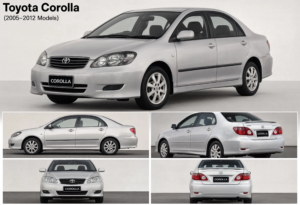
The Toyota Corolla is, without exaggeration, the king of Nigerian roads. It is the most popular sedan in the country for good reason: it is practically indestructible, incredibly fuel-efficient, and supported by an enormous parts and service network. At this price point, you can find clean Tokunbo examples from 2005–2008 and well-maintained Nigerian-used models up to 2012.
The 9th generation (2001–2006) and 10th generation (2007–2013) Corollas are both excellent choices. The 10th generation offers improved safety features, a more modern interior, and marginally better fuel economy.
Specifications Table
| Specification | Details |
|---|---|
| Price Range | ₦2.8M – ₦5.0M (depending on year, condition, and Tokunbo vs. Nigerian-used) |
| Engine | 1.6L or 1.8L 4-cylinder petrol |
| Transmission | 4-speed or 5-speed automatic; manual available |
| Fuel Economy | 11–14 km/litre (urban); 15–18 km/litre (highway) |
| Seating Capacity | 5 passengers |
| Safety Features | Dual front airbags, ABS (on higher trims), crumple zones |
| Estimated Monthly Maintenance | ₦15,000 – ₦30,000 |
| Pros | Exceptional reliability, excellent fuel economy, highest resale value in class, parts everywhere |
| Cons | Interior can feel basic, limited boot space vs. Camry, underpowered for highway overtaking with 1.6L engine |
Who Should Buy It?
The Toyota Corolla is perfect for daily commuters, first-time car buyers, young professionals, Uber/Bolt drivers, and anyone who wants a car that simply works without drama. If you want the lowest possible cost of ownership, this is your car.
Ownership Costs (Estimated Annual TCO)
| Cost Category | Estimated Annual Cost |
|---|---|
| Fuel (15,000 km/year) | ₦750,000 – ₦950,000 |
| Insurance (third-party) | ₦15,000 – ₦30,000 |
| Insurance (comprehensive) | ₦150,000 – ₦250,000 |
| Routine Maintenance | ₦180,000 – ₦360,000 |
| Registration/Road Worthiness | ₦20,000 – ₦40,000 |
| Total Estimated Annual Cost | ₦965,000 – ₦1,630,000 |
Expert Verdict
The Toyota Corolla remains our #1 recommendation for buyers under ₦5 million. It is not exciting. It will not turn heads. But it will start every morning, sip fuel modestly, and retain its value better than almost anything else on this list. The 2008–2012 models, in particular, offer an excellent balance of modern features and affordability.
Buying Tips
- Prioritize the 1.8L engine if you drive on highways frequently — it has noticeably better overtaking power.
- Check for dashboard warning lights carefully; a faulty catalytic converter is a common issue on high-mileage models.
- Insist on seeing maintenance records if buying Nigerian-used.
- Budget an additional ₦50,000–₦150,000 for a full service (oil change, filters, brake pads, alignment) immediately after purchase.
Alternatives
Toyota Premio, Toyota Allion, Honda Civic
2. Toyota Camry (2003–2008 Models)
Overview:
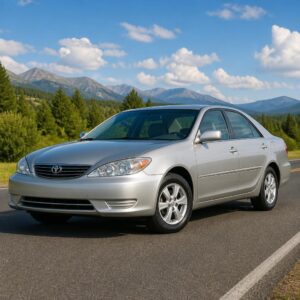
If the Corolla is king, the Toyota Camry is the executive suite. The Camry offers more space, more power, and a more comfortable ride — making it a favourite among Nigerian professionals, families, and even some fleet operators. The “Big Daddy” Camry (2003–2006, XV30) and the “Muscle” or “Spider” Camry (2007–2011, XV40) are both attainable under ₦5 million, though the newer models sit at the very top of the budget.
The Camry’s 2.4L engine provides confident acceleration and highway cruising ability, though it consumes more fuel than the Corolla.
Specifications Table
| Specification | Details |
|---|---|
| Price Range | ₦2.5M – ₦5.0M |
| Engine | 2.4L 4-cylinder petrol (most common); 3.0L V6 available |
| Transmission | 4-speed or 5-speed automatic |
| Fuel Economy | 8–11 km/litre (urban); 13–16 km/litre (highway) |
| Seating Capacity | 5 passengers |
| Safety Features | Dual front airbags, ABS, traction control (on select trims) |
| Estimated Monthly Maintenance | ₦20,000 – ₦40,000 |
| Pros | Spacious interior, strong engine, comfortable ride, excellent resale value, abundant parts |
| Cons | Higher fuel consumption, more expensive to maintain than Corolla, bulkier for tight urban parking |
Who Should Buy It?
The Camry is ideal for mid-level professionals, families needing space, business owners who want a presentable vehicle, and anyone who regularly drives long distances. It’s also a strong choice for those who need a vehicle with enough presence for client meetings.
Ownership Costs (Estimated Annual TCO)
| Cost Category | Estimated Annual Cost |
|---|---|
| Fuel (15,000 km/year) | ₦950,000 – ₦1,300,000 |
| Insurance (third-party) | ₦15,000 – ₦30,000 |
| Insurance (comprehensive) | ₦175,000 – ₦300,000 |
| Routine Maintenance | ₦240,000 – ₦480,000 |
| Registration/Road Worthiness | ₦20,000 – ₦40,000 |
| Total Estimated Annual Cost | ₦1,400,000 – ₦2,150,000 |
Expert Verdict
The Camry is the best “step up” from the Corolla. If you can afford the higher fuel and maintenance costs, it rewards you with a genuinely comfortable, spacious, and confidence-inspiring driving experience. The 2007–2008 “Muscle” Camry, in particular, still looks contemporary on Nigerian roads.
Buying Tips
- Avoid the V6 models unless you’re comfortable with significantly higher fuel costs.
- Check the transmission carefully — the 2007–2009 Camry had some reports of transmission hesitation. Test drive extensively.
- The leather seats on XLE trims crack easily in Nigeria’s heat. Budget for seat covers or restoration.
Alternatives
Honda Accord, Nissan Altima, Toyota Avalon (older models)
3. Honda Civic (2006–2010 Models)
Overview:
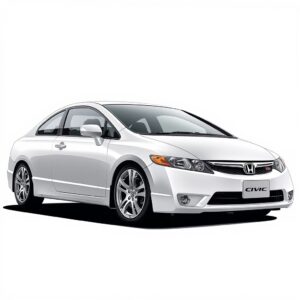
The Honda Civic is the driver’s choice in this price bracket. Where the Corolla prioritises reliability above all else and the Camry focuses on comfort, the Civic delivers a driving experience that is genuinely engaging. The 8th generation Civic (2006–2011) brought a futuristic dashboard design, a responsive 1.8L i-VTEC engine, and handling that feels sporty without being harsh.
It is an excellent choice for younger buyers and driving enthusiasts who want something with character but don’t want to sacrifice reliability.
Specifications Table
| Specification | Details |
|---|---|
| Price Range | ₦2.5M – ₦4.8M |
| Engine | 1.8L 4-cylinder i-VTEC |
| Transmission | 5-speed automatic or manual |
| Fuel Economy | 10–13 km/litre (urban); 15–18 km/litre (highway) |
| Seating Capacity | 5 passengers |
| Safety Features | Dual front airbags, side airbags (on select trims), ABS, stability control |
| Estimated Monthly Maintenance | ₦20,000 – ₦40,000 |
| Pros | Fun to drive, excellent fuel economy, unique interior design, reliable Honda engineering |
| Cons | Parts slightly more expensive than Toyota equivalents, rear visibility limited, road noise on rough surfaces |
Who Should Buy It?
The Honda Civic suits young professionals, driving enthusiasts, tech-savvy buyers who appreciate the digital dashboard, and anyone who wants a car with personality. It’s also popular among ride-hailing drivers who want a comfortable but engaging daily driver.
Ownership Costs (Estimated Annual TCO)
| Cost Category | Estimated Annual Cost |
|---|---|
| Fuel (15,000 km/year) | ₦800,000 – ₦1,050,000 |
| Insurance (comprehensive) | ₦150,000 – ₦250,000 |
| Routine Maintenance | ₦240,000 – ₦480,000 |
| Registration/Road Worthiness | ₦20,000 – ₦40,000 |
| Total Estimated Annual Cost | ₦1,210,000 – ₦1,820,000 |
Expert Verdict
The Civic is our top pick for buyers who want more than basic transportation. It’s almost as reliable as a Corolla, more engaging to drive, and holds its value well. The only caveat: Honda parts cost 10–20% more than Toyota parts on average, and fewer roadside mechanics specialise in Honda engines compared to Toyota.
Buying Tips
- The automatic transmission fluid should be changed every 40,000 km. Ask for proof or budget for an immediate change.
- Check the air conditioning compressor — it’s a common failure point on high-mileage Civics in hot climates.
- The 2006–2008 models offer the best value; 2009–2010 models command a premium.
Alternatives
Toyota Corolla, Mazda 3, Kia Cerato
4. Kia Rio (2012–2016 Models)
Overview:
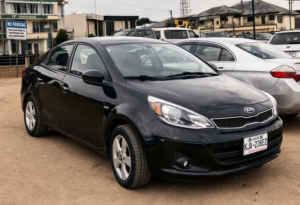
The Kia Rio represents a new wave of Korean vehicles that have earned genuine respect in the Nigerian market. The third-generation Rio (2012–2017) is a subcompact that punches well above its weight, offering modern styling, a well-equipped interior, and one of the best fuel economy ratings in this entire list.
At under ₦5 million, you can find clean Tokunbo 2012–2014 models and well-maintained Nigerian-used examples up to 2016 — making this one of the newest cars available at this price point.
Specifications Table
| Specification | Details |
|---|---|
| Price Range | ₦2.8M – ₦5.0M |
| Engine | 1.4L or 1.6L 4-cylinder petrol |
| Transmission | 6-speed automatic or manual |
| Fuel Economy | 13–16 km/litre (urban); 18–22 km/litre (highway) |
| Seating Capacity | 5 passengers |
| Safety Features | Dual front airbags, ABS, stability control, ISOFIX (select trims) |
| Estimated Monthly Maintenance | ₦15,000 – ₦30,000 |
| Pros | Excellent fuel economy, modern features, relatively new model year for the price, comfortable ride |
| Cons | Smaller cabin than Corolla/Civic, lower resale value than Toyota, fewer specialised mechanics, limited boot space |
Who Should Buy It?
The Kia Rio is perfect for budget-conscious commuters, single professionals, couples without children, and anyone who prioritises fuel economy above all else. It’s also an excellent second car for families.
Expert Verdict
The Kia Rio is a hidden gem. It’s the most fuel-efficient car on this list, it feels the most modern inside, and it’s mechanically straightforward. The main trade-off is resale value — Kias depreciate faster than Toyotas in Nigeria. But if you plan to drive this car for 4–5 years or more, the savings on fuel alone can offset the depreciation difference.
Buying Tips
- The 1.4L engine is sufficient for city driving; opt for the 1.6L if you do highway runs.
- Korean cars are sensitive to substandard engine oil. Always use manufacturer-recommended specifications.
- Check for rust underneath — the Rio’s underbody can corrode if exposed to floodwater.
Alternatives
Hyundai Accent, Toyota Yaris, Kia Picanto
5. Toyota Matrix (2005–2010 Models)
Overview:
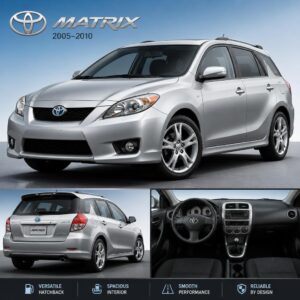
The Toyota Matrix is one of the most versatile vehicles under ₦5 million. Built on the same platform as the Toyota Corolla, it offers the Corolla’s legendary reliability in a more practical hatchback/wagon body style. The elevated ride height, generous cargo space, and fold-flat rear seats make it ideal for buyers who need to carry more than a sedan allows.
The Matrix shares most of its mechanical components with the Corolla, meaning parts availability is outstanding and maintenance costs are similarly low.
Specifications Table
| Specification | Details |
|---|---|
| Price Range | ₦2.8M – ₦5.0M |
| Engine | 1.8L 4-cylinder (2ZR-FE or 1ZZ-FE) |
| Transmission | 4-speed or 5-speed automatic; manual available |
| Fuel Economy | 10–13 km/litre (urban); 14–17 km/litre (highway) |
| Seating Capacity | 5 passengers |
| Safety Features | Dual front airbags, ABS, side curtain airbags (select trims) |
| Estimated Monthly Maintenance | ₦15,000 – ₦30,000 |
| Pros | Corolla reliability in a versatile body, excellent cargo space, slightly higher ground clearance, strong resale value |
| Cons | Road noise at highway speeds, slightly higher fuel consumption than Corolla sedan, limited availability compared to Corolla |
Who Should Buy It?
The Matrix is the ideal car for small business owners who carry goods, young families needing versatility, weekend adventurers, and anyone who finds sedan boot space limiting. It’s also an excellent choice for those who want SUV-like practicality without SUV fuel consumption.
Expert Verdict
Think of the Matrix as a Corolla that went to the gym and learned to carry luggage. It does everything the Corolla does, plus it adds genuine practicality. The second-generation Matrix (2009–2014) is particularly attractive, with a more refined interior and improved safety features, though it sits at the very top of the ₦5 million budget.
Buying Tips
- The AWD (all-wheel drive) version exists but is rare and more expensive to maintain. FWD (front-wheel drive) is the smarter buy.
- Check the rear hatch struts — they weaken over time and the hatch won’t stay up on its own.
- Shares so many parts with the Corolla that any Corolla mechanic can service it competently.
Alternatives
Pontiac Vibe (mechanical twin), Toyota Corolla Verso, Honda Fit
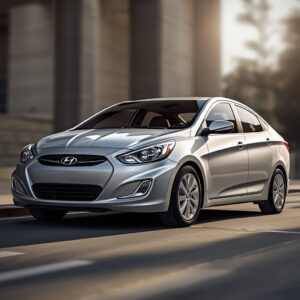
6. Hyundai Accent (2012–2016 Models)
Overview:
The Hyundai Accent has quietly become one of the best-value propositions in the Nigerian used car market. The fourth-generation Accent (2011–2017) offers a surprisingly mature driving experience, modern design language, and one of the lowest ownership costs in this price segment.
Like the Kia Rio (Hyundai and Kia share a parent company), the Accent benefits from Korea’s modern manufacturing quality. The 1.4L and 1.6L engines are efficient and straightforward to maintain.
Specifications Table
| Specification | Details |
|---|---|
| Price Range | ₦2.3M – ₦4.5M |
| Engine | 1.4L or 1.6L 4-cylinder petrol |
| Transmission | 6-speed automatic or manual |
| Fuel Economy | 12–15 km/litre (urban); 17–20 km/litre (highway) |
| Seating Capacity | 5 passengers |
| Safety Features | Dual front airbags, ABS, stability control |
| Estimated Monthly Maintenance | ₦12,000 – ₦28,000 |
| Pros | Very affordable, excellent fuel economy, modern features for the price, comfortable ride |
| Cons | Lower resale value than Japanese competitors, smaller dealer/mechanic network, perceived brand stigma (unfairly so) |
Who Should Buy It?
The Accent is ideal for extreme budget buyers, students, NYSC members, first-time owners, and anyone who needs reliable basic transportation at the lowest possible entry price. It’s also strong for ride-hailing drivers looking to maximise fuel savings.
Expert Verdict
The Hyundai Accent is the best entry-level car on this list. At ₦2.3M–₦4.5M, it offers remarkable value. Yes, it won’t hold its value like a Corolla. Yes, finding a Hyundai specialist mechanic takes slightly more effort. But the car itself is genuinely good — comfortable, efficient, and well-built. Don’t let brand snobbery blind you to this excellent option.
Buying Tips
- Insist on checking the timing chain (not belt) — the 1.6L engine uses a chain that should last the life of the engine but can become noisy if oil changes are neglected.
- The automatic transmission is generally reliable, but test the gear shifts thoroughly during your test drive.
- Look for the GLS trim for the best equipment-to-price ratio.
Alternatives
Kia Rio, Toyota Yaris, Nissan Versa
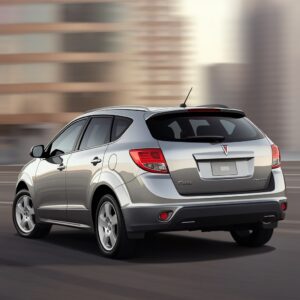
7. Pontiac Vibe (2005–2010 Models)
Overview:
Here’s an open secret in the Nigerian car market: the Pontiac Vibe is a Toyota Matrix in American clothing. General Motors and Toyota jointly developed this vehicle at the NUMMI plant in California. It uses the same Toyota engine, the same Toyota transmission, and shares over 80% of its parts with the Toyota Matrix.
The result? You get Toyota reliability at a Pontiac price — which is almost always lower than the equivalent Matrix, simply because of the Pontiac badge.
Specifications Table
| Specification | Details |
|---|---|
| Price Range | ₦2.3M – ₦4.5M |
| Engine | 1.8L 4-cylinder Toyota engine (1ZZ-FE or 2ZR-FE) |
| Transmission | 4-speed or 5-speed automatic; manual available |
| Fuel Economy | 10–13 km/litre (urban); 14–17 km/litre (highway) |
| Seating Capacity | 5 passengers |
| Safety Features | Dual front airbags, ABS, stability control (select trims) |
| Estimated Monthly Maintenance | ₦15,000 – ₦30,000 |
| Pros | Toyota engine reliability, cheaper than equivalent Matrix, spacious cargo area, parts interchangeable with Matrix/Corolla |
| Cons | Pontiac brand discontinued (no new models since 2010), exterior styling divisive, slightly lower resale value than Matrix |
Who Should Buy It?
The Vibe is for smart buyers who understand that badge doesn’t equal quality. It suits the same buyer as the Matrix — small business owners, families, practical-minded individuals — but rewards them with a lower purchase price.
Expert Verdict
The Pontiac Vibe is arguably the smartest buy on this entire list. You are getting 95% of the Toyota Matrix experience for 15–25% less money. The only downside is the Pontiac badge can affect resale value. But if you’re buying to own and drive rather than to flip, the Vibe is a phenomenal deal.
Buying Tips
- Because it shares Toyota parts, you can walk into any Toyota parts market (Ladipo, etc.) and find what you need.
- The GT version has a more powerful engine but is rarer and not necessarily worth the premium.
- Check the plastic body cladding on lower trims — it can look dated. This is cosmetic only and doesn’t affect reliability.
Alternatives
Toyota Matrix, Honda Fit, Scion xB
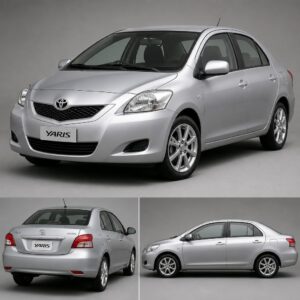
8. Toyota Yaris / Belta (2007–2012 Models)
Overview:
The Toyota Yaris (known as the Belta in some markets) is the smallest Toyota on this list, and it’s a fuel-sipping champion. With a tiny 1.3L engine, it is one of the most fuel-efficient cars available in Nigeria’s used car market — a critical advantage as fuel prices continue to climb.
The Yaris is a no-frills, back-to-basics car. It doesn’t pretend to be anything it isn’t: it’s small, simple, economical, and reliable. For city driving, it is hard to beat.
Specifications Table
| Specification | Details |
|---|---|
| Price Range | ₦2.0M – ₦4.0M |
| Engine | 1.3L 4-cylinder (2NZ-FE) |
| Transmission | 4-speed automatic or manual |
| Fuel Economy | 14–17 km/litre (urban); 19–23 km/litre (highway) |
| Seating Capacity | 5 passengers |
| Safety Features | Dual front airbags, ABS (select trims) |
| Estimated Monthly Maintenance | ₦10,000 – ₦25,000 |
| Pros | Best fuel economy on this list, Toyota reliability, very low maintenance costs, compact size ideal for city traffic |
| Cons | Underpowered on highways, cramped rear seats for adults, minimal features, limited boot space |
Who Should Buy It?
The Yaris/Belta is for city-only drivers, students, individuals with very tight budgets, second-car buyers, and anyone whose primary concern is minimising running costs. If you drive primarily within Lagos, Abuja, or any major city, the Yaris makes tremendous financial sense.
Expert Verdict
The Yaris is the financial optimiser’s dream car. It costs the least to buy, the least to fuel, and the least to maintain. Its limitations are real — it’s small, it’s slow, and it’s basic — but if your goal is reliable A-to-B transportation at the absolute lowest cost, nothing on this list beats it.
Alternatives
Hyundai Accent, Kia Rio, Honda Fit
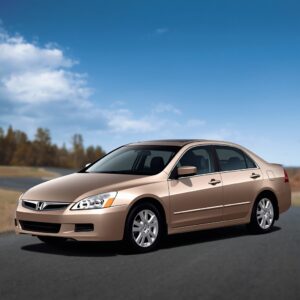
9. Honda Accord (2004–2007 Models)\
Overview:
The Honda Accord brings a touch of premium to the sub-₦5 million bracket. The 7th generation Accord (2003–2007) is a mid-size sedan that competes directly with the Toyota Camry but offers a sportier driving feel, a more driver-focused interior, and the renowned Honda engineering quality.
The 2.4L i-VTEC engine delivers strong performance, and the Accord’s chassis provides confidence-inspiring handling that the Camry simply cannot match. This is the car for buyers who want something that feels special without paying a premium price.
Specifications Table
| Specification | Details |
|---|---|
| Price Range | ₦2.5M – ₦4.8M |
| Engine | 2.4L 4-cylinder i-VTEC; 3.0L V6 available |
| Transmission | 5-speed automatic |
| Fuel Economy | 8–11 km/litre (urban); 13–16 km/litre (highway) |
| Seating Capacity | 5 passengers |
| Safety Features | Dual front airbags, side airbags, ABS, stability control |
| Estimated Monthly Maintenance | ₦25,000 – ₦45,000 |
| Pros | Excellent driving dynamics, premium interior feel, strong engine, comprehensive safety features |
| Cons | Higher maintenance costs than Toyota, parts more expensive, automatic transmission can be fragile on high-mileage examples |
Who Should Buy It?
The Accord is for driving enthusiasts who need a practical sedan, professionals who want something a bit more distinguished than a Camry, and buyers who value the driving experience as much as reliability.
Expert Verdict
The Accord is a genuinely premium car at a non-premium price. It drives better than the Camry and feels more special inside. However, higher maintenance costs and the notorious fragility of Honda’s 5-speed automatic transmission in this generation mean it requires more careful buying. A pre-purchase inspection from a qualified mechanic — ideally one specialising in Honda vehicles — is absolutely essential.
Buying Tips
- Critical warning: The 2003–2007 Honda Accord automatic transmission is known for premature failure. Budget ₦400,000–₦800,000 for a potential transmission rebuild or replacement. Alternatively, seek a manual transmission model.
- Check the power steering rack — leaks are common and repairs can cost ₦100,000–₦200,000.
- The V6 model is more powerful but significantly thirstier. Stick with the 2.4L for the best balance.
Alternatives
Toyota Camry, Nissan Altima, Mazda 6
10. Toyota RAV4 (2003–2006 Models)
Overview:
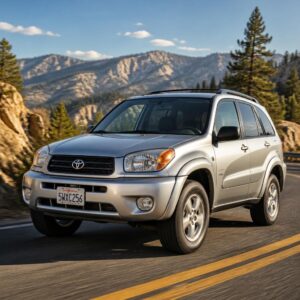
For buyers seeking an SUV experience under ₦5 million, the second-generation Toyota RAV4 (2001–2005) is the most accessible and practical option. It offers genuine off-road capability, higher ground clearance for Nigerian roads, and the legendary Toyota reliability — all in a compact, manageable package.
The RAV4 is one of the few affordable SUVs that can genuinely handle Nigeria’s challenging road conditions — from flooded streets in Lagos to unpaved roads in the southeast — without the fuel consumption penalty of a full-size SUV.
Specifications Table
| Specification | Details |
|---|---|
| Price Range | ₦3.0M – ₦5.0M |
| Engine | 2.0L or 2.4L 4-cylinder petrol |
| Transmission | 4-speed automatic |
| Fuel Economy | 8–11 km/litre (urban); 12–15 km/litre (highway) |
| Seating Capacity | 5 passengers |
| Safety Features | Dual front airbags, ABS, side airbags (select trims) |
| Estimated Monthly Maintenance | ₦20,000 – ₦40,000 |
| Pros | High ground clearance, Toyota reliability, AWD available, best for Nigerian roads in this price range, compact SUV size |
| Cons | Higher fuel consumption than sedans, limited boot space for an SUV, can feel underpowered with the 2.0L engine, older design |
Who Should Buy It?
The RAV4 is ideal for buyers who prioritise ground clearance, families in areas with poor road infrastructure, professionals who travel between cities regularly, and anyone who has been burned by a sedan scraping its underbody on Nigeria’s potholes and speed bumps.
Expert Verdict
The RAV4 is the only SUV on this list, and it earns its place. If you genuinely need higher ground clearance — and in Nigeria, this is not a luxury but often a necessity — the RAV4 delivers it without the crushing fuel costs of a Highlander or 4Runner. The 2004–2005 models offer the best balance of price and features.
This is one of the best cars for Nigerian roads in the sub-₦5 million category.
Buying Tips
- The AWD system adds ₦200,000–₦500,000 to the price but is worth it if you frequently encounter unpaved or flooded roads.
- Check the rear differential seal on AWD models — leaks can lead to expensive repairs.
- The spare tyre mounted on the rear door can cause the door hinges to weaken over time. Inspect carefully.
Alternatives
Honda CR-V (2003–2006), Nissan X-Trail (2003–2007), Hyundai Tucson (2005–2009)
Side-by-Side Comparison Table
| Vehicle | Price Range (₦) | Fuel Economy (km/L urban) | Reliability Rating | Monthly Maintenance (₦) | Resale Value | Safety Rating |
|---|---|---|---|---|---|---|
| Toyota Corolla | 2.8M – 5.0M | 11–14 | ★★★★★ | 15K – 30K | ★★★★★ | ★★★★☆ |
| Toyota Camry | 2.5M – 5.0M | 8–11 | ★★★★★ | 20K – 40K | ★★★★★ | ★★★★☆ |
| Honda Civic | 2.5M – 4.8M | 10–13 | ★★★★☆ | 20K – 40K | ★★★★☆ | ★★★★☆ |
| Kia Rio | 2.8M – 5.0M | 13–16 | ★★★★☆ | 15K – 30K | ★★★☆☆ | ★★★★☆ |
| Toyota Matrix | 2.8M – 5.0M | 10–13 | ★★★★★ | 15K – 30K | ★★★★☆ | ★★★★☆ |
| Hyundai Accent | 2.3M – 4.5M | 12–15 | ★★★★☆ | 12K – 28K | ★★★☆☆ | ★★★☆☆ |
| Pontiac Vibe | 2.3M – 4.5M | 10–13 | ★★★★★ | 15K – 30K | ★★★☆☆ | ★★★★☆ |
| Toyota Yaris | 2.0M – 4.0M | 14–17 | ★★★★★ | 10K – 25K | ★★★★☆ | ★★★☆☆ |
| Honda Accord | 2.5M – 4.8M | 8–11 | ★★★☆☆ | 25K – 45K | ★★★★☆ | ★★★★★ |
| Toyota RAV4 | 3.0M – 5.0M | 8–11 | ★★★★☆ | 20K – 40K | ★★★★☆ | ★★★★☆ |
Key Takeaways from Comparison:
- Best Overall Value: Toyota Corolla
- Best Fuel Economy: Toyota Yaris / Kia Rio
- Best for Families: Toyota Camry / Toyota Matrix
- Best Driving Experience: Honda Civic / Honda Accord
- Best for Bad Roads: Toyota RAV4
- Best Budget Buy: Hyundai Accent / Pontiac Vibe
Complete Buying Guide: How to Buy a Car Under ₦5 Million in Nigeria
Financing Options Available in Nigeria
Not everyone has ₦5 million cash ready. Here are your primary vehicle financing options:
1. Bank Auto Loans
Most Nigerian commercial banks offer auto loan products:
- Typical interest rate: 18–28% per annum
- Down payment: 20–40% of vehicle value
- Loan tenure: 12–48 months
- Requirements: Salary account, employment letter, 6 months bank statement, valid ID
- Major providers: GTBank, Access Bank, UBA, Stanbic IBTC, FCMB
2. Fintech Vehicle Financing
- Autochek Finance: Offers flexible auto loans with partnerships across multiple lenders. Apply online at autochek.africa.
- Cars45 Finance: Integrated with their marketplace for seamless buy-and-finance experiences.
- Moove: Primarily for ride-hailing drivers, offering vehicle financing tied to Uber/Bolt earnings.
3. Cooperative Societies
- Many workplace cooperatives offer vehicle loans at 8–15% interest rates — significantly below bank rates.
- Repayment is typically deducted from salary.
- This is often the cheapest financing option available.
4. Hire Purchase / Lease-to-Own
- Some car dealerships offer hire-purchase arrangements where you pay in instalments and own the vehicle after the final payment.
- Read the fine print carefully — total costs can exceed bank loan costs.
Pre-Purchase Inspection Checklist
Never buy a used car without a thorough inspection. Here is your essential checklist:
Exterior:
- ☐ Check all body panels for colour mismatch (indicates accident repair)
- ☐ Inspect for rust, especially under the car, wheel arches, and boot floor
- ☐ Verify all lights work (headlights, tail lights, indicators, brake lights)
- ☐ Check tyre condition and tread depth (minimum 2mm)
- ☐ Ensure all glass is intact and free from major cracks
Interior:
- ☐ Test all electrical components (windows, mirrors, AC, radio, dashboard lights)
- ☐ Check for water damage (musty smell, water stains on carpet, foggy headlights)
- ☐ Verify mileage consistency (compare odometer with wear on pedals, steering wheel, seats)
- ☐ Test all seats, seatbelts, and adjustment mechanisms
Mechanical:
- ☐ Start the engine cold and listen for unusual noises (knocking, ticking, rattling)
- ☐ Check for smoke from the exhaust (blue = oil burning; white = head gasket; black = fuel system)
- ☐ Test drive for at least 15 minutes in varied conditions (city, highway, bumps)
- ☐ Check transmission shifts (should be smooth with no hesitation, jerking, or slipping)
- ☐ Test brakes thoroughly (should stop straight without pulling to one side)
- ☐ Check engine oil (should be amber/brown, not milky or black)
- ☐ Inspect coolant (should be clean, not oily or rusty)
- ☐ Look under the car for leaks after the test drive
Documentation:
- ☐ Verify vehicle papers (customs duty receipt, bill of lading for Tokunbo)
- ☐ Check vehicle identification number (VIN) matches all documents
- ☐ Run a vehicle history check if possible
- ☐ Confirm the seller has legitimate ownership
Pro Tip: Hire a professional vehicle inspection service. Companies like Cars45 Inspection, AutoMedics, and independent mechanics offer pre-purchase inspections for ₦15,000–₦50,000 — an investment that can save you millions in hidden problems.
Registration Process Overview
After purchasing your vehicle, you need to complete the following:
- Change of Ownership: Process through the state Motor Vehicle Administration (MVA) or Federal Road Safety Corps (FRSC) office.
- Vehicle Registration: Obtain new number plates and vehicle licence. Cost varies by state (typically ₦30,000–₦80,000 for private vehicles).
- Road Worthiness Certificate: Required annually. Cost: ₦5,000–₦10,000.
- Vehicle Insurance: Minimum third-party insurance is mandatory. Auto insurance costs start from ₦15,000 annually for third-party coverage.
- Hackney Permit: Required only if using the vehicle for commercial purposes.
Insurance Considerations
Understanding your insurance options is crucial:
| Insurance Type | Coverage | Typical Annual Cost |
|---|---|---|
| Third-Party Only | Covers damage to other people/property only | ₦15,000 – ₦30,000 |
| Third-Party, Fire & Theft | Above + fire damage and theft of your vehicle | ₦40,000 – ₦80,000 |
| Comprehensive | Full coverage including your vehicle | 3–5% of vehicle value annually |
Recommended providers: Leadway Assurance, AXA Mansard, Custodian Insurance, Cornerstone Insurance, AIICO Insurance.
For a car worth ₦4 million, comprehensive auto insurance would cost approximately ₦120,000–₦200,000 annually. While third-party is the legal minimum, comprehensive coverage is strongly recommended for vehicles in this price range.
Negotiation Strategies
- Research prices before visiting: Check Cars45, Jiji, Cheki, and Facebook marketplace to understand current market prices. Walk in informed.
- Always inspect before discussing price: Find issues first, then use them as negotiation leverage.
- Start 15–20% below asking price: Sellers typically build in negotiation room.
- Be prepared to walk away: This is your strongest negotiation tool. If the price isn’t right, leave. Genuine sellers will call you back.
- Pay attention to total cost, not just price: Factor in necessary repairs, registration, and insurance.
- Buy in January–March: Prices typically dip after the December festive season rush.
- Cash talks: If paying cash (and the seller is motivated), you have leverage for a better deal.
- Don’t show excessive enthusiasm: The more excited you appear, the less willing the seller is to negotiate.
7 Common Mistakes to Avoid When Buying a Car Under ₦5 Million
1. Buying Without a Pre-Purchase Inspection
This is the single most expensive mistake Nigerian car buyers make. A car that looks perfect can hide engine problems, transmission issues, or accident damage that costs millions to repair. Always invest ₦15,000–₦50,000 in a professional inspection. It is the cheapest insurance you will ever buy.
2. Ignoring Total Cost of Ownership
The purchase price is just the beginning. A cheap car with expensive parts and poor fuel economy will cost you far more over three years than a slightly more expensive car with better efficiency and cheaper maintenance. Always calculate the full ownership cost before deciding.
3. Buying Based on Brand Alone
Some buyers will only consider Toyota, regardless of other factors. While Toyota’s reputation is well-earned, a well-maintained Kia Rio or Hyundai Accent can offer equal or better value at a lower price. Evaluate each car on its individual merits, not just its badge.
4. Skipping the Documentation Check
Buying a car with incomplete or fraudulent papers can lead to vehicle seizure by customs, inability to register, or criminal liability if the car was stolen. Verify every document, and consider using vehicle verification platforms like the FRSC’s National Vehicle Identification Scheme (NVIS).
5. Falling for “Just Arrived” Pressure
Dealers who say “this car just arrived, someone else is coming to see it this afternoon” are using a classic pressure tactic. Legitimate deals don’t evaporate in hours. Take your time, do your due diligence, and never let urgency override caution.
6. Not Test Driving Properly
A 5-minute drive around the block is not a test drive. You need at least 15–20 minutes covering city streets, highway speeds (if possible), speed bumps, and rough patches. Test the brakes hard. Test the AC at idle. Listen to the engine under load. Drive over bumps and listen for suspension noises.
7. Neglecting Insurance and Emergency Fund
Many buyers spend their entire budget on the car, leaving nothing for insurance, registration, or an emergency repair fund. Budget at least ₦200,000–₦500,000 above the purchase price for registration, insurance, immediate servicing, and an emergency repair reserve. An extended warranty from a reputable provider can also provide peace of mind, though options are limited in the Nigerian market for used vehicles.
Useful Resources
Online Car Marketplaces
- Cars45: cars45.com — Buy, sell, and finance used cars
- Jiji.ng: jiji.ng/cars — Nigeria’s largest classified marketplace
- Autochek: autochek.africa — Pan-African vehicle marketplace with financing
Vehicle Verification & History
- FRSC NVIS: nvis.frsc.gov.ng — National Vehicle Identification Scheme
- Nigeria Customs Service: customs.gov.ng — Import duty verification
Insurance Providers
- AXA Mansard: axamansard.com
- Leadway Assurance: leadway.com
- Custodian Insurance: custodianinsurance.com
Government Transport Portals
- Federal Road Safety Corps (FRSC): frsc.gov.ng
- Lagos State Motor Vehicle Administration (MVA): mvaa.lagosstate.gov.ng
- National Automotive Design and Development Council (NADDC): naddc.gov.ng
Manufacturer Websites
- Toyota Nigeria: toyota.com.ng
- Honda (Global): honda.com
- Kia Nigeria (Dana Motors): danamotors.com
- Hyundai (Stallion Motors): stallionmotors.com
Maintenance Services
- Find reliable maintenance services near you through Google Maps, Autochek Workshop, or recommendations from automotive communities on platforms like Nairaland’s Motoring section.
Frequently Asked Questions (FAQs)
Q1: What is the best car to buy under ₦5 million in Nigeria in 2026?
The Toyota Corolla (2005–2012) is widely considered the best car under ₦5 million in Nigeria due to its exceptional reliability, low maintenance costs, excellent fuel economy, and highest resale value in its class. However, the “best” car depends on your specific needs — the Kia Rio offers better fuel economy, the Toyota Camry offers more space, and the Toyota RAV4 offers higher ground clearance for bad roads.
Q2: Is it better to buy Tokunbo or Nigerian-used cars?
Both have advantages. Tokunbo (foreign-used) cars typically have verified mileage, better maintenance history, and less wear from harsh driving conditions. Nigerian-used cars are often cheaper upfront and may have already been adapted to local conditions (e.g., upgraded suspension). The key is thorough inspection regardless of source. A well-maintained Nigerian-used car can be better than a neglected Tokunbo.
Q3: How much does car insurance cost in Nigeria?
Third-party insurance (the legal minimum) costs ₦15,000–₦30,000 annually. Comprehensive insurance costs 3–5% of your vehicle’s value per year. For a car worth ₦4 million, expect to pay ₦120,000–₦200,000 annually for comprehensive coverage. We strongly recommend comprehensive auto insurance for any vehicle purchase in this range.
Q4: What are the cheapest cars to maintain in Nigeria?
The Toyota Yaris, Toyota Corolla, and Pontiac Vibe are the cheapest cars to maintain in this price range, with monthly maintenance costs as low as ₦10,000–₦30,000. Their parts are abundantly available at major markets like Ladipo in Lagos, keeping costs competitive.
Q5: Can I get car financing in Nigeria with a low salary?
Yes, several options exist. Cooperative societies often have the lowest requirements. Fintech platforms like Autochek offer flexible terms. Most bank vehicle loans require a minimum salary of ₦100,000–₦150,000 monthly and a 20–40% down payment. Some platforms cater specifically to lower-income earners.
Q6: What is the fuel consumption of the best cars under ₦5 million?
Fuel economy varies significantly. The most fuel-efficient cars in this range include the Toyota Yaris (14–17 km/L), Kia Rio (13–16 km/L), and Hyundai Accent (12–15 km/L) for urban driving. The Toyota Camry and Honda Accord are the thirstiest at 8–11 km/L in the city.
Q7: How do I verify if a car has been in an accident?
Look for colour mismatches between body panels, uneven panel gaps, paint overspray on rubber seals, and welding marks in the boot or under the bonnet. A professional vehicle inspection using tools like paint thickness gauges can detect previous repairs. You can also request a vehicle history report through platforms like Carfax (for US-sourced Tokunbo vehicles).
Q8: Which SUVs can I buy under ₦5 million in Nigeria?
The Toyota RAV4 (2003–2006) is the most reliable SUV option under ₦5 million. Other options include the Honda CR-V (2003–2006), Hyundai Tucson (2005–2009), and Nissan X-Trail (2003–2007), though parts availability varies. These affordable SUVs offer the ground clearance needed for Nigerian road conditions.
Q9: What documents do I need when buying a used car in Nigeria?
Essential documents include: proof of ownership (receipt of purchase), customs duty papers (for Tokunbo), vehicle licence, Certificate of Road Worthiness, valid insurance certificate, and FRSC vehicle number plate. Always verify the Vehicle Identification Number (VIN) matches across all documents.
Q10: When is the best time to buy a used car in Nigeria?
January to March typically offers the best prices. Demand drops after the December festive season, and sellers who imported vehicles for the holidays may be motivated to sell at lower prices. Avoid buying in October–December when demand and prices peak. Car prices in Nigeria are most negotiable during the early months of the year.
Conclusion & Recommendations
Finding the best cars under 5 million naira in 2026 requires more knowledge, patience, and strategic thinking than ever before. The Nigerian automotive market is challenging — prices are high, exchange rates are volatile, and the risk of buying a problematic vehicle is real. But armed with the right information, you can still find excellent, reliable transportation within this budget.
Our Top Recommendations by Category:
| Category | Our Pick | Why |
|---|---|---|
| Best Overall | Toyota Corolla (2008–2012) | Unmatched reliability + fuel economy + resale value |
| Best Value | Pontiac Vibe (2005–2010) | Toyota quality at a lower price |
| Best for Families | Toyota Camry (2007–2008) | Space, comfort, and dependability |
| Best Fuel Economy | Toyota Yaris (2007–2012) | Lowest running costs on this list |
| Best for Bad Roads | Toyota RAV4 (2003–2006) | Only SUV option with proven reliability |
| Best for New Buyers | Hyundai Accent (2012–2016) | Lowest entry price + modern features |
| Best Driving Experience | Honda Civic (2006–2010) | Engaging, sporty, and practical |
| Smartest Hidden Gem | Kia Rio (2012–2016) | Newest car for the money + exceptional efficiency |
Final Advice
- Set your total budget, not just the purchase price. Add ₦200,000–₦500,000 for registration, insurance, immediate servicing, and an emergency fund.
- Always get a professional pre-purchase inspection. This single step prevents the majority of buyer’s remorse stories.
- Consider financing if it makes sense. Don’t drain your savings completely — explore vehicle financing Nigeria options to maintain financial flexibility.
- Buy based on your actual needs. A fuel-efficient Yaris might serve you better than a prestigious Camry if you’re primarily commuting in city traffic.
- Think long-term. Consider resale value, maintenance costs, and parts availability — not just the purchase price.
The Nigerian road is tough on cars and tougher on unprepared buyers. But with the knowledge in this guide, you’re ready to make a confident, informed decision.
Last updated: January 2026. Prices and availability are estimates based on market research and may vary by location, vehicle condition, and seller. CarWise.NG recommends independent verification of all pricing and vehicle conditions before purchase. This article is for informational purposes only and does not constitute financial or purchasing advice. CarWise.NG may earn commissions from partner links featured in this article.
About CarWise.NG: We are Nigeria’s trusted source for automotive intelligence — helping millions of Nigerians make smarter vehicle buying, financing, and ownership decisions. Our editorial team combines decades of automotive journalism experience with deep knowledge of the Nigerian market.